I'm Sorry But You Have to AssimilateSep 17
if you want to live here, you have to integrate. it's the least you can do.
183 Likes
34 Comments
May 18, 2026
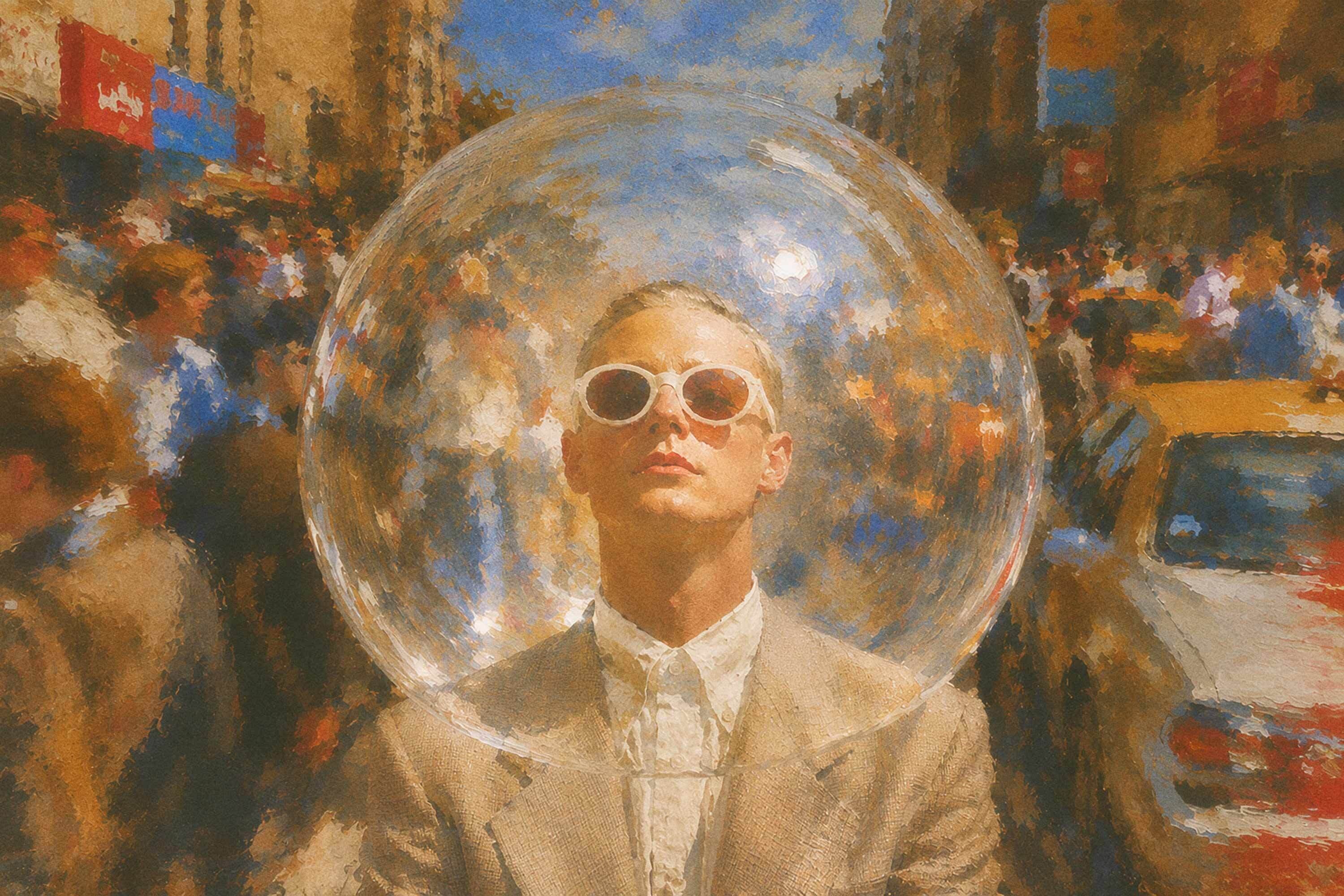
The infamous and much-maligned “Why Do Rich People Love Quiet?” article — published in The Atlantic in 2022 and written by Xochitl Gonzalez, a 2023 Pulitzer Prize Finalist who explored “how gentrification and the predominant white culture in the U.S. stifle the physical and emotional expression of racial minorities” — went¹ viral multiple times over the past month. (Seemingly spontaneously at first, and then again after she published a nihilistic essay vaguely in favor of smoking cigarettes, which itself went viral.)
The basic thrust of her noise-focused essay, for those blissfully unaware, is that the desire for “quiet” is a classist and ethnocentric construct weaponized against certain cultures (the author is Puerto Rican, and much of the piece is autobiographical). She cites being shushed in a library’s “Absolutely Quiet Room,” in university common spaces and computer clusters, in apartments and bars, at brunch, and so on, arguing that being Puerto Rican justifies creating an undue racket that clearly bothers people.
But Gonzalez’s writing is not the only recent viral catalyst of noise-related discourse: a video posted on X last week with over 10 million views shows one man threatening to “cut open” the face of another man on the subway who had asked him to turn his bluetooth speaker down. Another video, this one with nearly six million views, highlights the whirring noise emanating from some unidentified data center and has spawned popular quote-posts ranging from “people who have been telling me… it’s white supremacy to not want hard clipping reggaeton music in my neighborhood are now complaining about a faint whirring sound” to Andy Masley’s more pragmatic commentary about “temporary gas turbines.”
Obviously, unwanted exposure to sound often plays a key role in some of society’s most highly charged touchpoints.
This is because we, the roughly 295 million Americans living in metropolitan areas, exist in a world overflowing with noise: truck engines, bus brakes, no-muffler Mustangs, sirens of every kind, heavy machinery, gas-powered leaf blowers, bluetooth-speaker-wielding pedestrians, out-loud phone users watching slop on the subway, rooftop HVAC systems, jackhammers, airplanes, parties, protesters — and every one of these sounds represents a trade-off. The public good of “Peace & Quiet” is chipped away bit by bit for some other, presumably more valuable thing: construction, transportation, safety, entertainment, personal freedom, etc. How many of these booms, beeps, clangs, roars, thunks, and shrieks are really worth the exchange?
Do not, however, mistake me for a Luddite or Kaczynski-esque “return to monke” advocate. What follows is largely an argument for a culturally advanced and technologically enabled American Peace & Quiet; the only way out is through.
Picture a futuristic, utopian city with sophisticated physical infrastructure and unlimited digital intelligence. What do you hear? Metallic screeching has become the silence of maglev. Most vehicles are autonomous, eliminating the need for sirens and honking horns entirely. Backfires are gone, and grinding engine noise has been replaced with an almost musical electronic whir. Buildings are bidirectionally soundproofed, pleasing the loudspeaker user, writer, and newborn baby alike.
Here, invention has yielded complete cultural diffusion and financial abundance, creating a harmony that one intuitively feels is symbiotic with the imagined society and likely a necessary condition of its emergence. Cacophony’s absence has unmasked the beauty of this place: Birds roost and sing from verdant nooks of biophilic residential towers. Couples amble and chat, children laugh. The soundscape is neither raucous nor silent, but lively in a rejuvenating way.
Many modern noises are abrasive, piercing, sustained, grating, and derailing to even the most durable trains of thought. These intrusions are inadequately considered in the context of their sonic costs and have no place in an idyllic future. The general valence of this argument is neither novel nor unique to today’s America: societies have engaged in this tug-of-war between sound and silence for (literally) centuries, a social balancing act rife with sticky class implications and cultural hang-ups. But as we continue to reshape the American social contract in the face of newly invented technologies and ever-shifting cultural dynamics, the particulars and possibilities involved in creating oases of quiet are constantly evolving.
The withered state of Peace & Quiet in America is a cultural coordination problem disguised as a regulatory problem. Industrial technology made the noise burden worse, but future technology can offer solutions — if we get out of our own way. The current ramped-up state of these noises is not a feature of increased real-world productivity, and their anti-productive costs can be reasonably asserted.
Talking directly about these things has been difficult in recent decades, as they are inextricably tangled up in issues of race and class and immigration. But as the Byzantine sensitivity requirements of the 2010s and early 2020s continue to unravel, we can reform the American discourse around Peace & Quiet.
if you want to live here, you have to integrate. it's the least you can do.

how somali immigrants in minnesota (and now maine?) sent billions of taxpayer dollars to islamic terrorists — and what happens when we stop expecting people to assimilate

how a gas station megachain with palatial bathrooms, beef jerky walls, and neverending merchandise became a cultish American spectacle
a recounting of recent attacks by the insane, a history of america’s attempts to deal with severe mental illness, and an argument for the return of long-term psychiatric institutionalization
what a viral internet debate tells us about ourselves, society, and how fun it is to call your friends evil/a dumbass

if angelenos have any survival instinct left, they'll elect the only candidate capable of restoring our belief in reality