
How the Military Is Using Palantir to Fight WarsApr 10
the pentagon has wanted war ai since vietnam. this is how palantir built it.
123 Likes
15 Comments
Jul 16, 2026

If you ask Palantir’s Eliano Younes what his job title is, as a routine matter of course, as a tech reporter who is writing a story about him, you will get responses such as “don’t worry about it” or “I just do things” or “Lead Senior Intern, Garment Division.”
“The BLUF is I don’t really care what my title is. I don’t really care about titles. I just want to help the company win,” Eliano told me. “You could put ‘his unofficial title is “head of strategic engagement,” which he hates.’”
Basically (as head of Palantir’s merchandise store, among other projects), he makes really nice shirts.
You may have noticed, in your own travels, that the bar for corporate merch is in hell. Companies stick their logos on crap from China and call it a day. (See below.)

Palantir’s merch shop used to be a forgotten little shell of a cost center, too.
But starting in 2024, Eliano burned it to the ground and started from scratch.
Now the shop contains a certain marketing paradox: the garments highlight Palantir’s key people, themes, products, and stories — like Warp Speed (a nod to the company’s manufacturing app) and CEO Alex Karp’s “Dominate” motto — without sucking.
The cotton is sourced from Texas and North Carolina, then cut and sewn in California or Montana, Eliano said. Everything is customized — down to the shirt length, the elasticity of the collar, the weight of the cotton, the shape of the zippers: “I became sort of a clothing garment expert overnight.”
Other companies, when it comes to merch, index on design while sacrificing quality, he said. Eliano is “indexing on quality” while “using more subtle designs”:
“I want to focus on the actual quality of the garment, the craft over commodity,” he said. “A lot of companies fall into this trap of making these shirts that look cool and make people want to buy them maybe once… I want people to feel like they can represent us all the time.”
Tens of thousands of people are buying Palantir garments, with this year’s sales on track to double 2025’s, he said. Last week, Palantir’s “tennis drop” — a nod to Wimbledon and the tournament’s unfussy, white-on-white aesthetic — drove the company’s biggest day of merch sales ever. This Spring, the company’s “Chore Coat,” which sold out in roughly four hours, was written up by The New York Times’ fashion section, GQ, and The Atlantic.
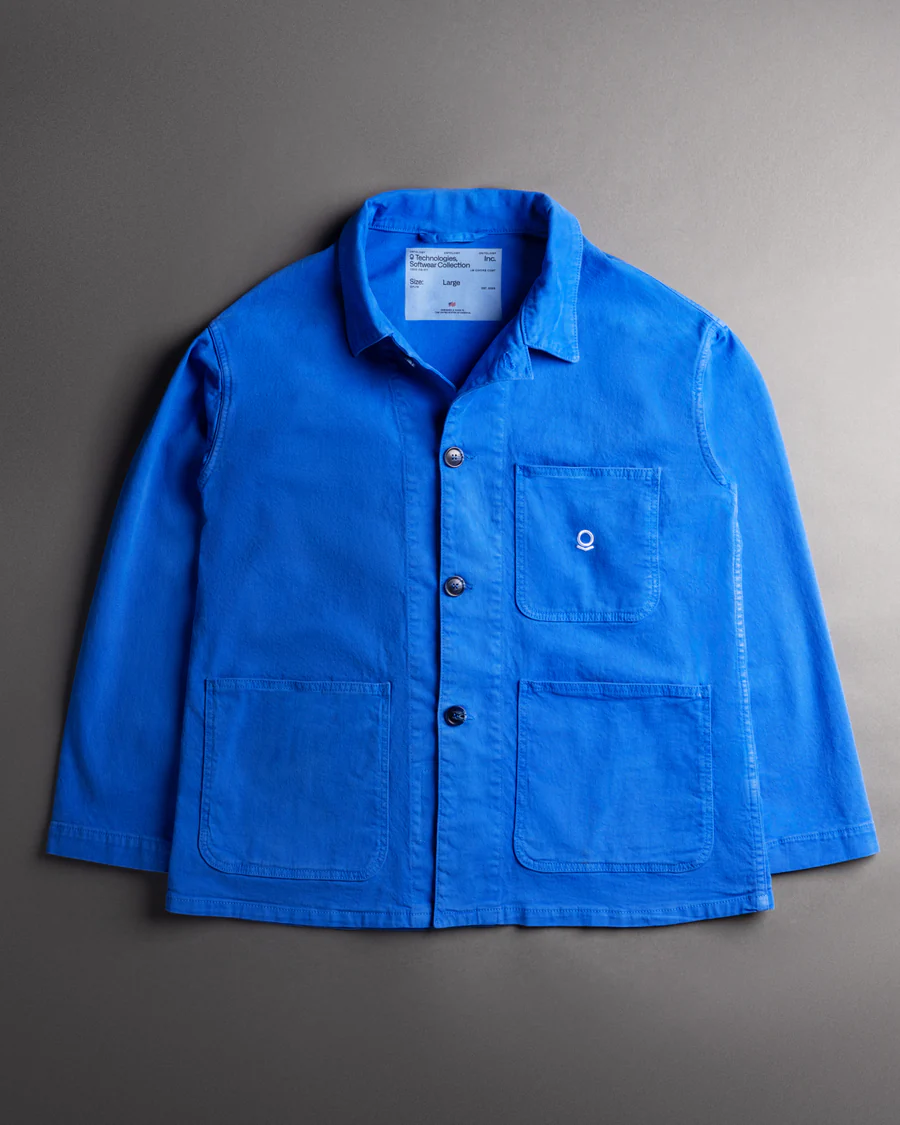
As Saahil Desai gushed for The Atlantic on June 25:
“The jacket is also the most comfortable and practical garment I own. It’s buttery soft and as heavy as a blanket, with three massive patch pockets that each can hold a paperback book. The coat’s plastic buttons — swirls of black and blue — are unlike any I have ever seen.”
only 1/3 of the boxes going out this week
Eliano A Younes @eliano · 2026-07-13T15:01:47.000Z
I’m sure the garments are getting so much attention because they’re really great.
But the attention is also because of two other things. One we already knew about (Palantir has haters). One we maybe didn’t: Palantir has… fans?
On the one hand: various journalists and internet lurkers have taken the company’s merch as another opportunity to bash it, saying the chore coat was “designed for the kind of guy rooting for today’s version of the military-industrial complex”; or “just another way for the spy tech firm to worm its way inside our brains”; or the “uniform that will be issued after we are all put in labor camps.”
One publication — unnameable, embarrassing — even ranked the chore coat, on its general “approval matrix,” proximate to flesh-eating bacteria.
“One thing that I feel like has been common throughout all of these different engagements is that the reporters… they cannot seem to understand why people are buying this,” Eliano told me. “Everything that they’ve been predisposed to about Palantir, whether it’s at parties or amongst their colleagues or what they’ve read online, is like ‘Palantir bad,’ ‘Palantir evil.’”
the pentagon has wanted war ai since vietnam. this is how palantir built it.

a former palantir engineer on how the company’s culture of relentless execution led to a $230 billion market cap

ivy league schools have become breeding grounds for chaos. palantir wants to give 18-year-olds another option.

palantir head of talent marge york on why they're poaching kids fresh out of high school, ivy league dysfunction, and what happens when you treat 18-year-olds like adults

palantir cto shyam sankar doesn't build high-performing engineering teams, he wins. here's how.

technologists are replaying the debates of the nuclear age, confusing technical brilliance for political judgement and gambling with our country’s future