Peggy Johnson is the Chief Executive Officer of Agility, an American humanoid robotics company.
Most Americans have by now seen the viral clips: humanoid robots dancing, sprinting, folding laundry. They make for great TikToks. They’re also a distraction from what’s actually happening. In factories, warehouses, and logistics centers across the country, humanoid robots are already doing real work, so the question for policymakers is no longer when this technology will arrive — but whether the United States will keep its lead or watch another technology slip to Beijing the way so many already have.
That question gets a real test this week. Wednesday, the House Energy and Commerce Committee’s Communications and Technology Subcommittee took up the GUARD Act, aka “Guarding the U.S. against Adversarial Robotics Dominance Act of 2026.” Drafted by Reps. John Moolenaar (R-MI), Jay Obernolte (R-CA), and Jennifer McClellan (D-VA), it would direct national security agencies to review humanoid and quadruped robots tied to foreign adversaries and, where warranted, add them to the Federal Communications Commission’s Covered List — the federal government’s blacklist for products and technologies that pose “unacceptable” risk to U.S. national security.
This bill has drawn support from both parties, because keeping adversary-controlled machines out of American infrastructure is not a red or blue issue. And, obviously, I have a stake in this: Agility, my company, assembles humanoids in Oregon and deploys them to customer facilities such as GXO Georgia and Schaeffler in South Carolina, where they’re already picking up dull or dangerous work (like running eight-hour factory shifts loading and unloading 25-pound baskets of parts in an auto plant). I endorsed the GUARD Act at introduction, and my competitors support it as well — because the threat it addresses affects our entire industry, and the workers and manufacturers who depend on it.
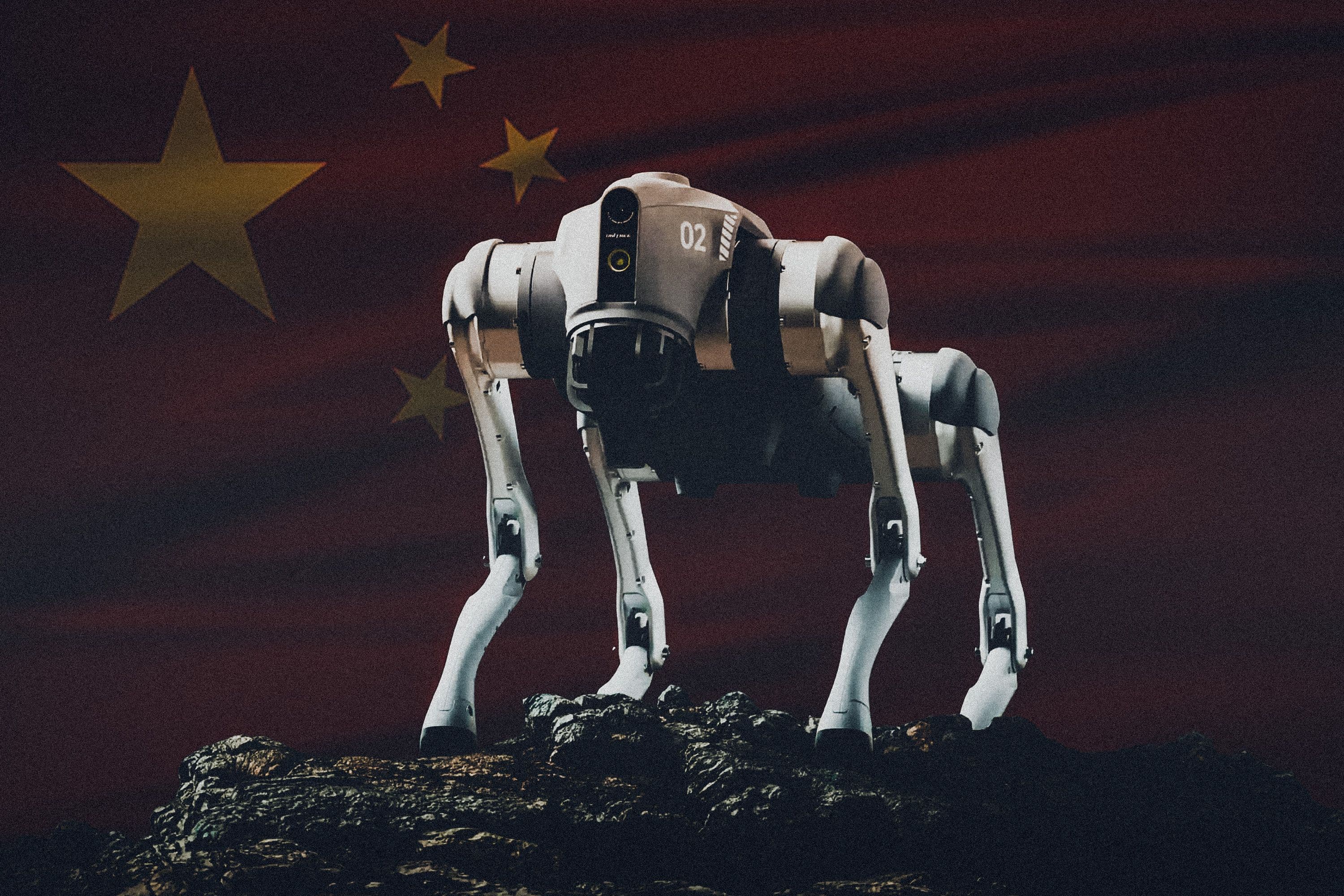
The national security risks are real, and documented. Last year, researchers found that the Go1 robot dog from Unitree — the Chinese firm at the center of this debate — shipped with a hidden, pre-installed backdoor that let outsiders take control of the robots and watch a live feed through their cameras. (A member of the House Select Committee on the CCP compared Unitree’s robots to “Trojan horses with cameras.”) A separate analysis found that robot dogs deployed at major U.S. research universities — including MIT, Princeton, and Carnegie Mellon — could have been vulnerable through that same backdoor. These are the machines American companies and municipalities are starting to buy, thanks to how cheap they are.
The threat extends to U.S. economic security. With price, supply, and multi-channel distribution advantages, Unitree is rapidly introducing basic and more complex humanoid units to our domestic market, and doing so with limited guardrails. That’s because the humanoid industry in China “has benefited from an abundance of local government subsidies and [favorable] policies.” This is the exact playbook the CCP ran with drones, solar panels, EV batteries, and telecom equipment. In each industry, the pattern is identical: flood the market at a price American firms cannot sustainably match, wait for the competition to thin out, then set the terms.
The same logic is playing out in frontier AI right now. Facing steep AI compute costs, American companies are shifting workloads onto Chinese-developed models, which are cheaper and open-weight. The threat these CCP models pose has grown so large that, in April, a joint congressional inquiry began investigating whether U.S. tech companies adopting tools built on Beijing’s terms could leave our country open to a backdoor cybersecurity threat.
We must create an even playing field that rewards the safest deployable technology capable of delivering value — not the cheapest platform subsidized by a foreign adversary.
Across a number of disruptive technologies in recent history — batteries, solar, drones, telecom, and now software — the lesson is the same: economic security is national security. That’s why we need the GUARD Act. Evaluating Chinese robotics platforms solely through the lens of proven data theft (our current approach) ignores the long-term strategic risk: state-backed manufacturers who leverage subsidies and below-market pricing to rapidly gain market share, weaken American competitors, and establish long-term dependence on technology created by a foreign adversary. The GUARD Act is designed to interrupt that cycle before Beijing’s economic dominance hardens into enduring, or extremely difficult to untangle, U.S. national security vulnerabilities.
America does not have the luxury of waiting to see how this plays out. Washington has accepted that we can’t take our AI leadership for granted. Now, they must extend that urgency to the machines AI increasingly powers.
—Peggy Johnson