
Revolution of the BroletariatMay 6
from the christ-like resurrection of america’s frat boy to the chadification of tech, anti-masculinity is over; chad maximalism has arrived
23 Likes
17 Comments
Oct 28, 2026
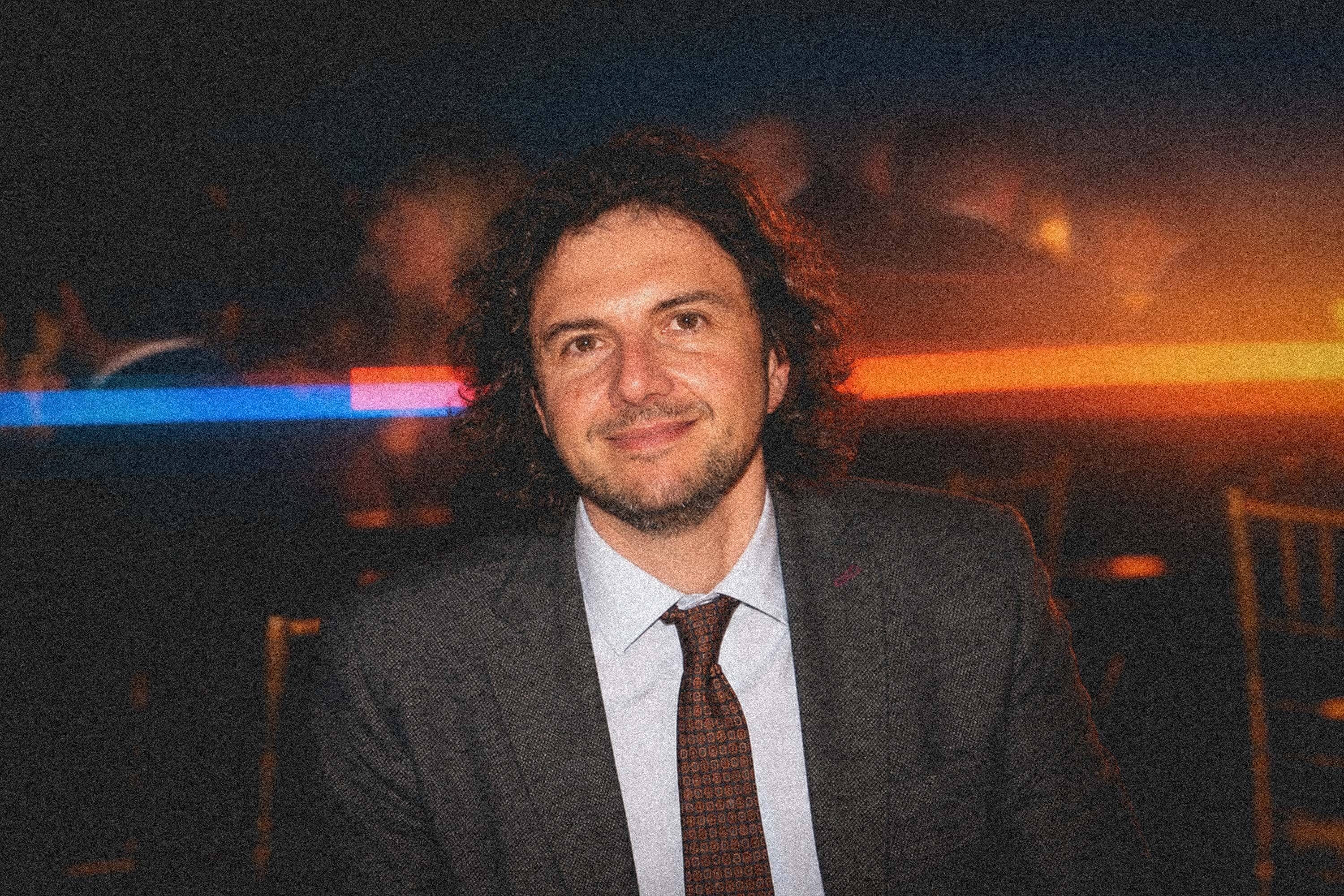
On Friday, October 23rd, I spoke with David Sabatini, 58, a scientist who formerly held positions at the Whitehead Institute for Biomedical Research, the Howard Hughes Medical Institution, and MIT. He had been on track to win the Nobel Prize right up until early 2021 — which he told me was his “last moment of happiness” — when his life and career were upended. The woman he had engaged in a consensual sexual relationship with between 2018 and 2019, Whitehead fellow Dr. Kristin Knouse, accused him of sexual assault and rape, and began claiming he was the ‘Weinstein of science’ — but only after he ended things and she found out he had moved on and was seeing another woman. He was later accused of perpetuating a “bro culture” in his lab.
As a result, he was fired from the Howard Hughes Medical Institution, which had funded his work at MIT, and forced to resign from the Whitehead Institute immediately. He was also placed on indefinite leave at MIT, from which he resigned in 2022 after a committee of three faculty members recommended his tenure be revoked. When NYU’s Grossman School of Medicine tried to hire him, student and faculty protests led him to withdraw his name from consideration. Things turned around somewhat in 2023, when Bill Ackman and an anonymous donor pledged $25 million to fund his research, and he was able to attempt to rebuild his career at the Czech Academy of Sciences in Prague — he was even able to open a Boston branch of his new lab in 2024. Still, he told me, it was never the same, especially with the jet lag and fatigue from all the travel this arrangement required of him.
Exactly two weeks before we spoke, on October 16th, a jury of seven women and six men found that Knouse had defamed Sabatini and interfered with his work. The jury rejected all of her counterclaims against him. He was awarded $6 million in damages, which comes out to $10 million with interest. Knouse is appealing the decision.
What follows is a lightly edited version of our conversation. As I exited our video call, all I could think was: here is a scientist who has made some of the biggest breakthroughs of our age — a man who is exceptional, definitionally abnormal in the best sense of the word. Here he is, begging for “normal.”
The people who put him in such a position — including Kristin Knouse — remain employed by the Whitehead Institute.
—Neeraja Deshpande
Neeraja Deshpande: Do you feel vindicated?
David Sabatini: Yes. I’d been saying that once someone looks at all the data, at all the documents, they will come to a different conclusion. And I think a jury trial — seven women, six men — is the gold standard for adjudicating things in the world.
It really made me so proud to be an American and to see how a jury trial operates — the formality, the care, the attempts to remove bias, the protocol. I hadn’t experienced those things.
But I’m really fundamentally upset that a jury of 13 people, 13 citizens who didn’t know me, and didn’t know her, looked at everything and came to a dramatically different conclusion than the Whitehead Institute and MIT. And why did they? For a simple reason: we, over years of litigation, obtained all the documents [of correspondence with Knouse], while the Whitehead Institute and MIT looked at 5% of the documents.
And so, the analogy I make is: here are scientific institutions that use the scientific method. It’s like writing a research paper and ignoring 95% of the data you have and just focusing on 5%. Are you likely to get the right story? You’re not. Everyone can understand that. The jury understood that.
Now, in terms of those five years, I’m very happy with the Ackmans and how they’ve treated me, with the students I’ve managed to hire in Prague, the postdocs and technicians, and what we’ve managed to build here in Boston. I’m eternally grateful for them.
Has it been an easy time for me? No. Is it the worst time of my life? Unequivocally the worst time, there’s no comparison. I’ve lost most of my hair. When I see old pictures online, I don’t even recognize myself. I was a different person.
But that’s what they wanted, they wanted me to suffer, they wanted pain, and they did it. They were very explicit in what they wanted. Thankfully, they wrote it all down, so that’s what the jury saw.
ND: What was it like to be in that courtroom as the jury’s verdict came in?
DS: My brother said later, “David, I was looking at you. You were emotionless. Even when things were going well, you didn’t smile.” I knew I was just looking at the foreperson: let’s keep going, let’s keep going.
When the jury’s last “no” was read [dismissing Knouse’s counterclaims against Sabatini], okay, then I knew. Then I could feel a little different. I have been under so much stress for so many years, and that has to program your brain in a completely different way. I’m not saying I have PTSD, but I have some lighter version of that that I think will take years to deprogram, if ever. I don’t remember the last time I’ve slept more than four hours. I have two types of recurring dreams pretty much every single night.
ND: What are those dreams?
DS: In the first one, I’m at Whitehead, meeting some of my students in my office or in some room, and then all of a sudden I realize I’m not supposed to be there, that I have to get out of the building, otherwise I’m going to be killed. I can see the front door sometimes, it’s a glass front, this luminous light, like a sun, like a really warm sun, not just bright, but just warm. And I’m trying to get there. I never make it. I never make it. I always get shot before I get there.
The second one is different. I’m supposed to meet with someone from the scientific community, either an ex-trainee or someone who’s visiting Boston, and I’m trying to get to them, I can see them, but I can never get to them. I don’t get shot in this dream, I just never make it. It’s almost like I’m trying to get back to the scientific community, but I’m not making it.
I have some version of those dreams every night.
ND: What did your scientific career look like up until this situation began?
DS: I come from a family of scientists and doctors and trained as an MD-PhD at Johns Hopkins, but I decided not to pursue the clinical side. I went to the Whitehead Institute in 1997 and started at their fellows program, where you’re given a small lab right after your PhD and you can build it up as a lab head. I eventually transitioned into the other principal investigator position they have there, which is the member position, and I joined MIT.
So I was there basically from ‘97 to August of 2021. There had never been any complaints about my lab. I had a large lab at that point, close to 40 people — postdocs, students, grad students, undergraduates, master’s students, technicians. Very intense lab. I tended to attract people that really wanted to get their own faculty positions and were very driven.
In general, we were always interested in this broader question of metabolism — you know, how we interface with the nutrients we eat, how they control our physiology, which is such a fundamental process for everything, right? In particular, we were interested in a system of proteins in the cell that goes by the name of the “mTOR pathway,” which I discovered as a graduate student and continued working on. It’s probably best known as the target of a drug called rapamycin, which is probably the best-validated anti-aging compound that’s out there. Many people actually take rapamycin.
So, we had tons of projects going on, working on diseases from Alzheimer’s to ovarian cancer to Huntington’s to lung diseases to many metabolic diseases. We were doing well, we published well, we made discoveries, we trained a lot of people. About 46 academic lab heads came out of my lab alone, including seven at Harvard. And of those seven, five are women.
ND: A lot of people unfamiliar with lab culture might not get just how tight-knit labs are, how you need real camaraderie to get that type of work done. What type of lab environment were you trying to foster?
DS: I think this is what’s very sad about American science right now. There used to be a bargain. You go and you work in a lab. You aren’t paid a lot. You work like crazy. 90% of your experiments don’t work — not because you’re incompetent, but because you said, “I think Mother Nature does it this way,” and then you try it, and Mother Nature says, “No it doesn’t, try again.” It takes a lot of fortitude to keep going when 90% of what you do is a failure.
But it was fun. That’s what it used to be. It was a lot of fun. The labs were fun. People were a little kooky, they worked really hard, they made jokes, and we talked about cool science all the time. You had friends who could help you with techniques, with ideas, to rattle things off, to look at your presentations.
For people to do great things, they need to be inspired. I’ll take a person who’s willing to work hard and be ambitious over some genius — because if you can inspire them, they will go and do great things. And I was good at inspiring people.
ND: The fact that Whitehead chose to go after you the way they did — what does that mean for the talent pipeline into science, to lose someone like you who was willing to train and vouch for so many people entering the field?
DS: There are two things you do as a lab head, which are my proudest achievements: you try to discover new things, and you try to train people. I am good at identifying worthy problems, motivating people, and helping them discover something new, which I then let them take to their new lab.
All of that got destroyed. All of our projects were destroyed.
When I restarted in Prague, I started with nothing. Like, literally nothing. Not a single written protocol, not a single reagent, not a single person, not a single grant, not a single piece of equipment. It was an empty room and me. That’s it. Literally nothing else, not even a microwave. That was incredibly hard.
I think we’ve all had this experience — you desire something so badly, and in my case, it was to get a lab again. You’re then given a lab, and then you realize the difficulty of rebuilding the thing that existed, which was not an empty room — it was a culture, it was people, it was reagents, it was projects.
Let’s be honest, I’ll never be able to rebuild that lab. It was 25 years of experience that was passed on from person to person, and that got destroyed.
ND: In 2024, the U. S. Department of Health and Human Services tried to debar you from ever receiving federal funding again. Can you talk about what that means as a scientist?
DS: Well, they did debar me. We fought back and provided more evidence that emerged during discovery, and we managed to undo the debarment.
When I got debarred, it was terrible. What happens is you end up on some list, and then vendors won’t sell to you anymore. So even though at that point I had built a lab in Cambridge using philanthropist money, we started getting notices from vendors saying they wouldn’t sell us stuff.
So, you can have all the money in the world, but if you can’t buy a reagent, you actually can’t do science. And so, that’s when I realized that I really had to be aggressive in trying to reverse the debarment.
Emotionally, it was horrible because I had received NIH funding since 1997. I had long-running grants that were more than 20 years old. The idea that not only did I have no grants, because of course they took all my grants, but that I couldn’t even get grants was incredibly demoralizing. I still don’t have NIH grants.
ND: What are you most proud of in terms of how you’ve handled this situation?
DS: I wanted to give up many times. Friends talked me out of it. My finances were destroyed, I was emotionally destroyed. But I guess I didn’t give up — what else can I say? I survived, right?
ND: What’s next for David Sabatini?
DS: In the past, if I was interested in working somewhere, I had contacts who’d think about me seriously. I don’t know now. I don’t know.
I just want to be normal. That’s it. I want to be the guy that can worry about normal things, like if the house needs a new roof I have the money to fix the roof. That’s what I want to be — the guy who looks forward to going out to dinner someday.
So, I just would like kind of the normal stuff that makes life, right? I don’t want to be on the front page of the Boston Globe anymore. I want to not bounce the check for my home insurance, or the water bill, which I’ve done. I mean, there were points where I had negative net worth.
I would like those things to just be normal. I don’t need to be rich. I just want to be normal.
from the christ-like resurrection of america’s frat boy to the chadification of tech, anti-masculinity is over; chad maximalism has arrived

the cornell 7 and lindsay clancy cases have sparked a resurgence of online female empowerment. in paris paloma’s ‘labour,’ these women have found their new slave song

even though the former reddit ceo's #metoo lawsuit was a dramatic failure, the press still dubbed her a "feminist hero," as tech's decade-long activist takeover kicked into high gear