
The Rise and Fall and Rise of Jensen Huang, A Complete TimelineNov 23
an accounting of what happened, when it happened, and (theories as to) why it happened
7 Likes
0 Comments
Nov 24, 2026
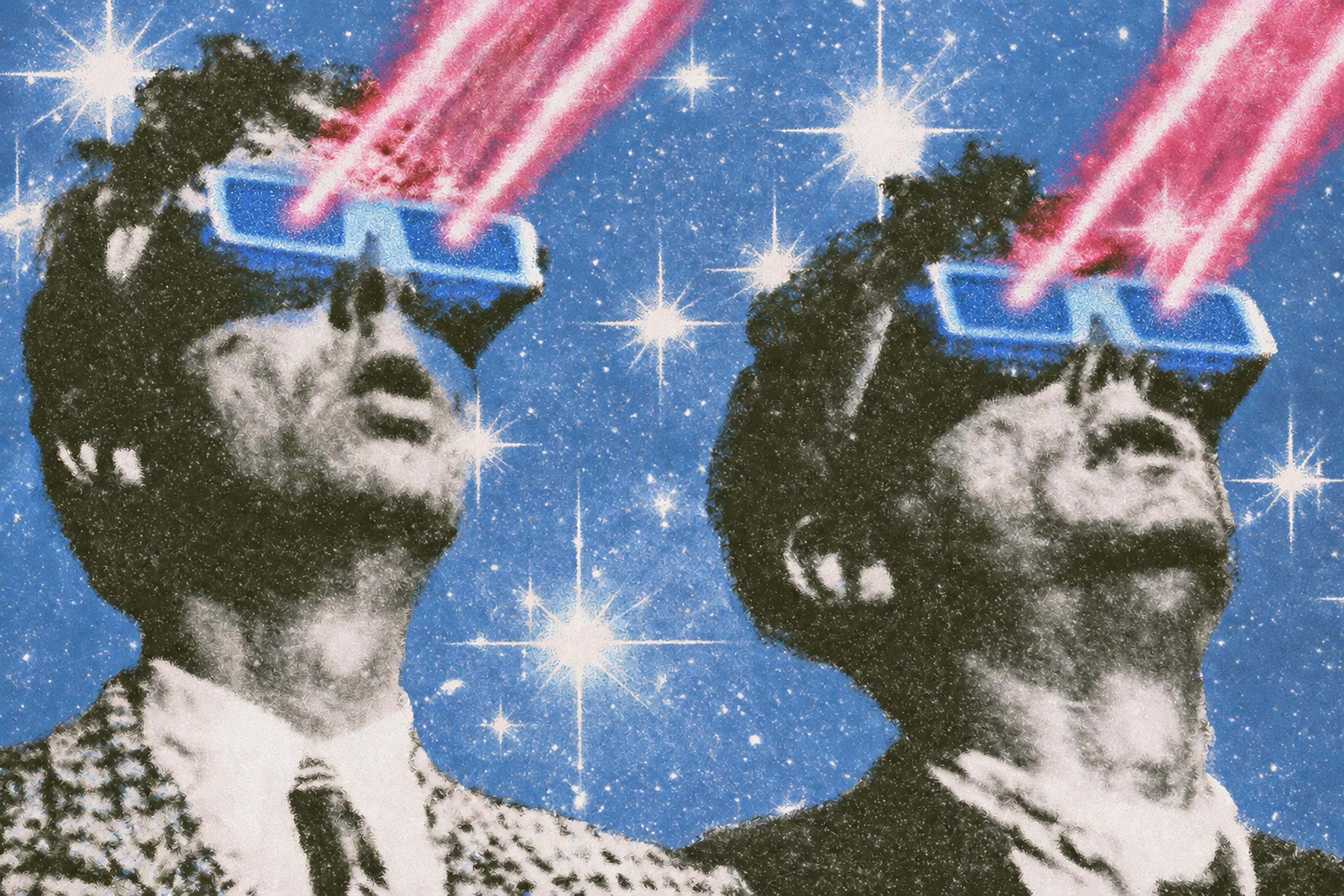
Well, folks, I regret to inform you that QAnon and Marjorie Taylor Greene have finally been vindicated! The Jews are, in fact, building space lasers, an entire network of them, actually, just as we’ve been warned all along. These lasers are meant to incinerate California, manipulate the weather, and carry out whatever else is the Rothschilds’ are up to. God help us all!
Just kiddingggg, lol.
While it is true that space lasers are being built by men of the circumcised variety, the culprits are actually two really nice, cute Jewish boys in Culver City, California, whose startup, Endeavor Optical Networks (EON for short) (fun wordplay on their part), has more wholesome ambitions. These guys just want to make the internet better and ultimately get data centers out of your backyard.
Let me, a Jewish woman in media (we’re probably not helping the allegations), tell you all about them!
Charlie Horowitz is a 28-year-old Harvard graduate who grew up in Los Angeles, and went on to work at Palantir (oh no) developing government software for “mostly DOD” projects (the conspiracy continues) before joining Apex, a startup manufacturing satellites other companies can customize for their own missions.
Tyler Presser, just a year younger than Horowitz, grew up outside Detroit and moved to LA to attend USC, where he earned his bachelor’s, master’s, and a PhD in orbital mechanics. While earning his PhD, Presser spent four and a half years at Advanced Space helping plan deep-space missions for NASA and the Department of War. Essentially, if the government wanted to send something to the moon, Mars, or an asteroid, Presser was one of the guys planning how it would get there.
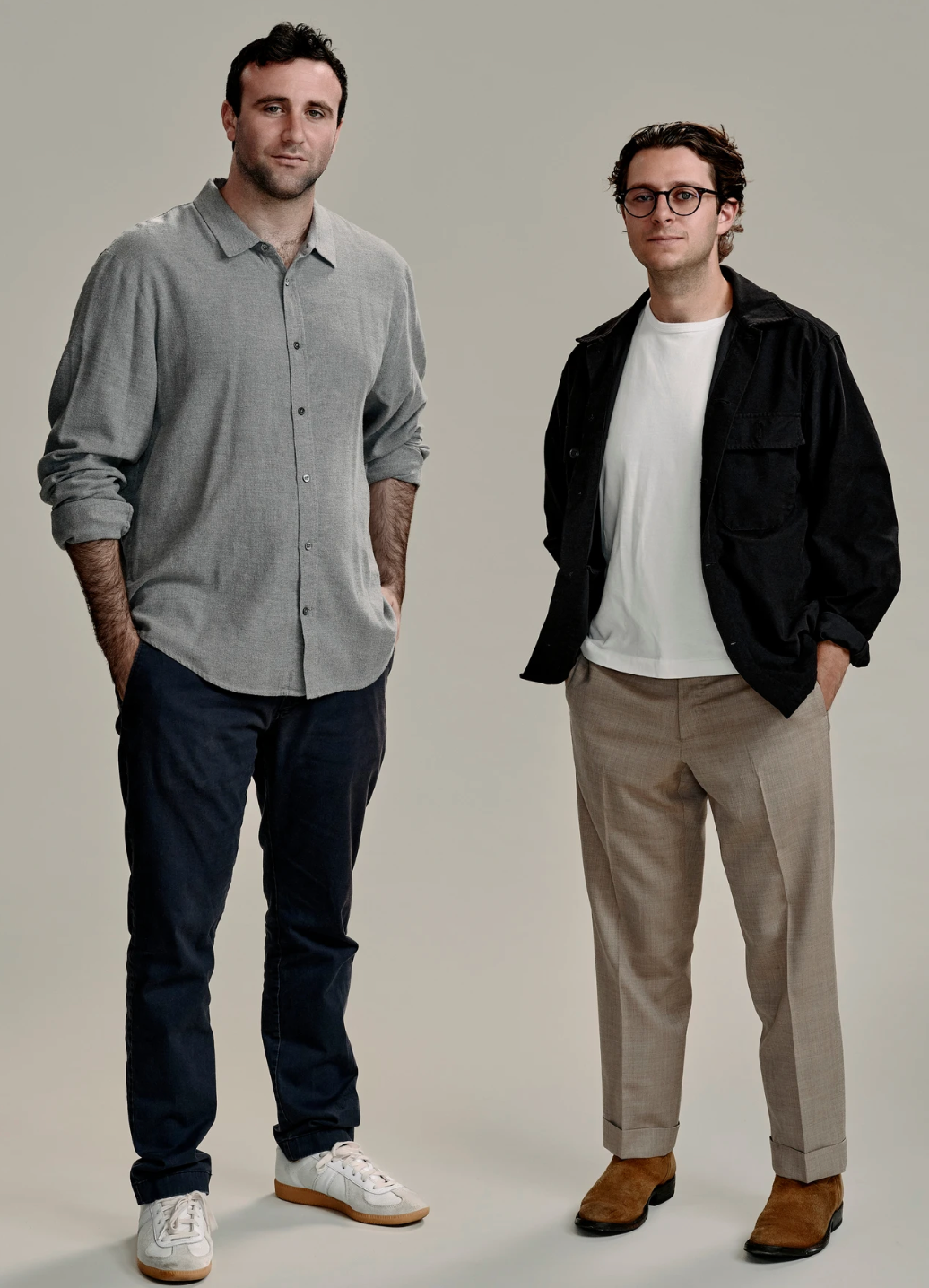
The men met through mutual friends and spent the next two years grabbing weekly beers at Father’s Office, talking about the wonders of space and whatnot.
Meanwhile, at Apex, Horowitz kept hearing the same complaint from their customers. They needed an alternative to subsea fiber-optic cables, which, despite all the talk of “the cloud,” are how nearly all data actually travels between continents and around the world.
These cables run for thousands of miles on the ocean floor, and carry data through them as pulses of light transmitted by hair-thin strands of glass.
Hyperscalers like Google and Meta rely on them to connect their data centers around the world — so if Google, for example, needs to back up information stored in America at a facility in Europe, that data has to literally cross the Atlantic. Roughly 95% of all intercontinental data traffic makes that journey through underwater cables.
For data centers, this dependence on the sub-sea networks limits where companies can build, even when cheaper land and abundant energy are available elsewhere (like in the desert, where solar power is plentiful but fiber connections can be prohibitively expensive to establish). Presser says some companies are already trying to put data centers “in the middle of the desert… but if you’re not connected to fiber, how do you get data in or out of the data center?”
an accounting of what happened, when it happened, and (theories as to) why it happened

‘money is, you know, a made up concept,’ says taylor frazier mccollum as she kills a project that would’ve generated thousands of jobs

a firestorm of media is trying to convince you that gta is woke, anti-woke, etc. its actually a game about shooting people and stealing cars. please, i beg you, just enjoy the game.

a holiday gift guide for the novice doomsday prepper in your life, or a personal field guide for the bunker 2020s, as we approach what seems to be the literal apocalypse

soon-to-be-rich ai employees are getting hair transplants, paying women to teach them intimacy, and spending $500k on elite matchmakers
elon announced that tesla will be winding down production of cybertruck — the most polarizing/ambitious/insane vehicle ever created. rest now, you beautiful, ugly giant. i’ll see you in valhalla.