Heather Cox Richardson’s Revisionist HistoryOct 14
substack's top writer, a historian, tells her 2.7 million readers that trump is a dictator
Dec 10, 2025

In October, Pirate Wires published one of its most popular stories to date: a feature about Heather Cox Richardson.
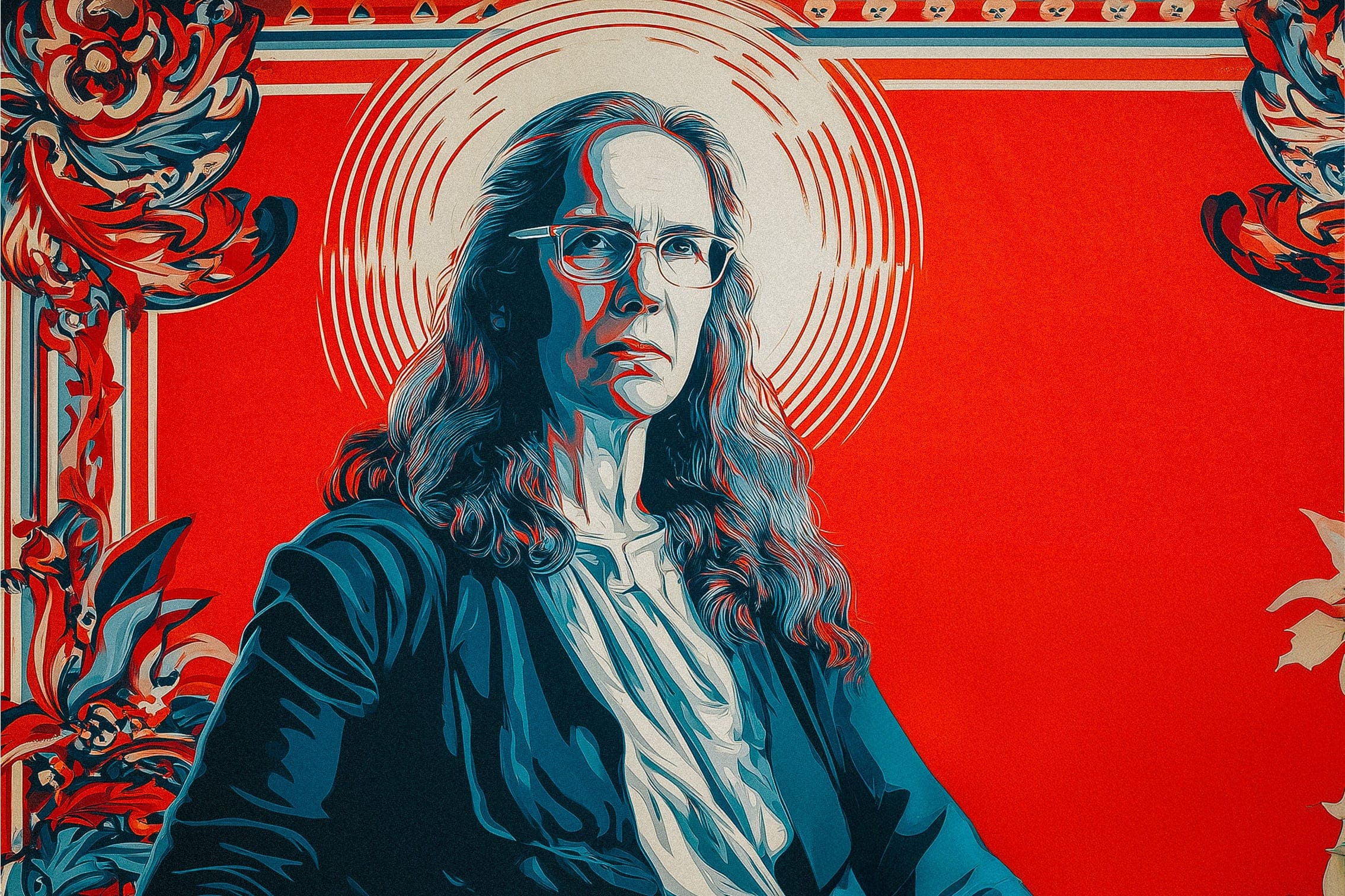
Richardson, or “HCR,” is an American historian and the most popular individual writer on Substack. Her nightly newsletter, Letters from an American, which recaps political news with context from history, has earned more than 2.7 million subscribers and made HCR one of the most influential voices in media. (Joe Biden, who she interviewed in 2022, has been photographed toting one of her books around.)
HCR is known as a neutral arbiter of history — a “distinctly unruffled voice” on the nation’s affairs, as The New York Times once wrote. But our story argued that she’s more of a critical watchdog of what she describes as the immediate “emergency” of Trump’s descent into fascism. Sometimes, she completely misstates facts — for instance, that Charlie Kirk’s shooter was right-wing, and that prominent Republicans blamed “the left” to incite violence against their political enemies — to suit that narrative, misleading her very devoted, large readership.
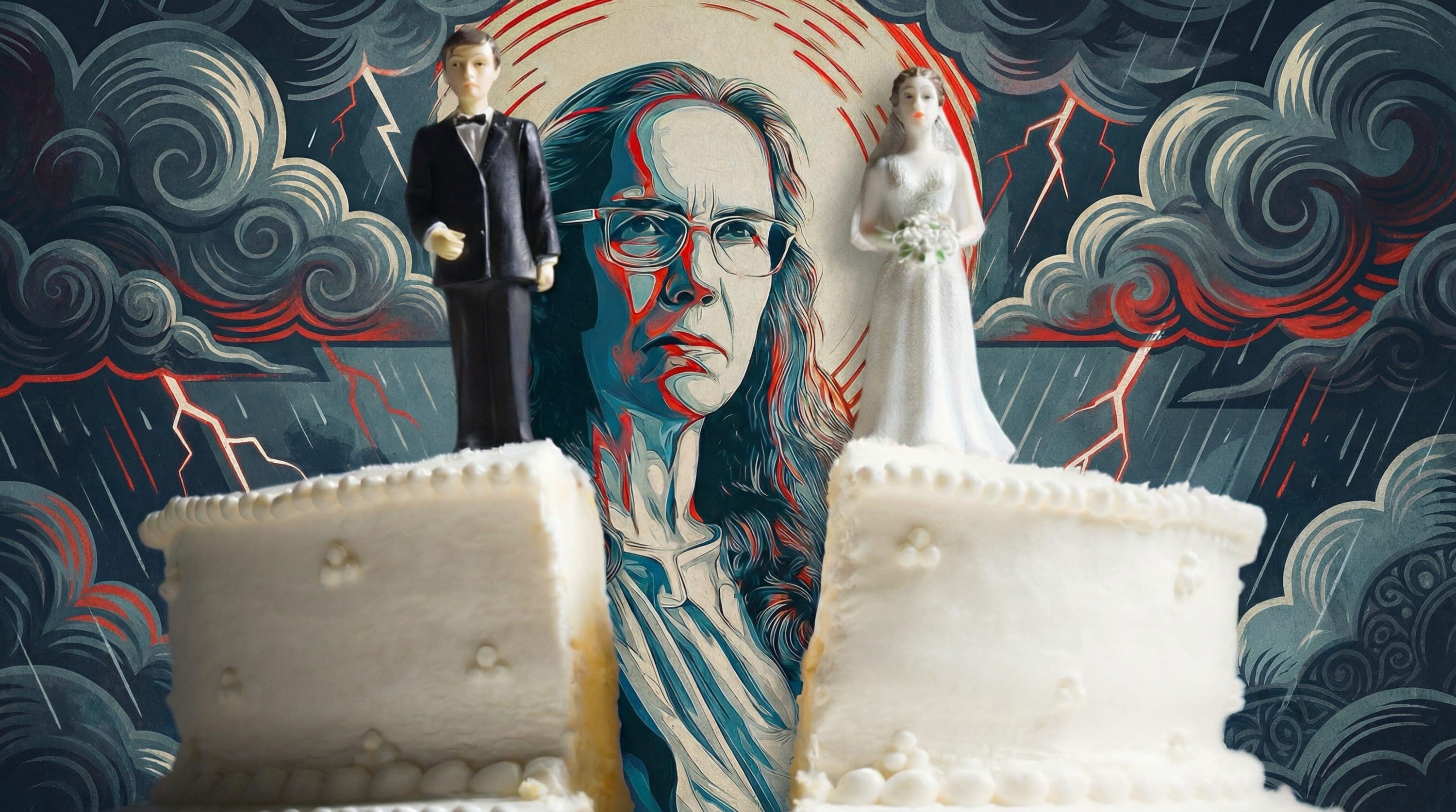
After publication, a man contacted Pirate Wires claiming that Heather Cox Richardson played a “proximate” role in his divorce. The daily inhalation of her writing helped intensify his wife’s contempt for all Republicans (including him) and fear that the country was being taken over by malign actors. This culminated in bitter conflicts, isolation, and, eventually, their separation. What follows is his account of their story, based on interviews with me.
Per the source’s request for privacy, the story has been anonymized with false names — Tom and Kate — and his ex-wife was not contacted. But Pirate Wires is aware of their identities and reviewed documentation that confirms the key elements of his account.
— Blake Dodge
Tom was always a right-of-center guy. Wealthy, in tech, but never particularly partisan: “I was never a card-carrying anything.”
9/11 changed that. The smoke had hardly cleared before, he felt, the mainstream talking heads were suggesting that the US had essentially asked for it. Then, language changed. You weren’t supposed to say the word “terrorist” anymore.
“I was just appalled,” he told me.
He took positions he’s no longer proud of. He thought the Iraq war was “justified and wise.” But then, he started traveling for business. In the world’s capitals, nobody was particularly interested in the “global” war on terror. He came to feel something was “really wrong at home.” That the US, thanks to the “intractable muck of our divide,” was being left behind.
He stopped voraciously reading the news, embracing confusion: “I just let it all go.”
Mid-life came. He moved to a southern city and, for the first time, kept company with liberals. They were happy, smart, and nice.
“I really, really, really liked that because what I was seeing was, ‘Okay, this is better.’ I see a way, in my mind, to the two halves of the country actually getting along just fine.”
That’s when he met Kate.
Tom was a world traveler with a high IQ. He often had to hold back around “muggles.”
In Kate, a “hardcore liberal feminist” with a Ph.D. in history, he found a “fellow traveler” of the world’s philosophical terrain, he said. She had an easy, inherent joy, but she could also throw her weight around in conversations about geopolitics: “A rare kind of somebody.”
“We were discovering things about ourselves and each other and the world we lived in as a result of: ‘Hey, there’s this person that I’m really into and they think differently about stuff — isn’t that interesting?’”
They could’ve kept going on like that forever: arguing, sometimes bitterly, about if tax cuts were a murderous assault on the poor, but then starting over. Night-capping by the fireplace. Repeat.
But in 2016, “Mr. Pussy Grabber” — meaning Donald Trump — “beats Hillary Clinton,” as Tom put it. And the marriage started to collapse.
Tom, who actually voted for Clinton, abhorred Trump’s lack of regard for civic institutions: “I’m like, ‘Eh, let’s not tear it all down. It’s a long way down from here. You should check your history.” But he thought the whole thing would blow over.
Kate, on the other hand, was apoplectic.
“It was the difference in emotional reaction between the two of us that started diverging things even more,” he said. “She was devastated, angry, wanting to join the pussy hat march, all this other stuff. And I’m like, ‘Jesus Christ, okay, whatever. Life goes on.’”
“Very different reactions, right?”
In 2019, Kate took the 1619 Project as absolute truth. In 2020, she believed the riots were justified by history. “Burning down cities because: reasons,” as Tom put it.
“No way no how is that okay. You don’t pick up a Molotov cocktail as a political expression. That’s just fundamentally wrong. And we got into shouting matches over that.”
Then comes November 2020, and Kate confronts her husband: “Are you going to join me in voting for Joe Biden?”
In fact, Tom now wanted to vote for Trump. Not unlike after 9/11, people on the left seemed to be losing their minds. He didn’t think defunding the police, canceling people, and burning cities down were good ideas: “It just all felt very witch burn-y to me,” he said.
But, empathically, he did not want to talk about it.
“I said, ‘You need to decide whether this is a marriage or a political party because that’s not okay. The voting booth is private for a reason. I don’t want to talk about this anymore. We’re married or we’re not.’”