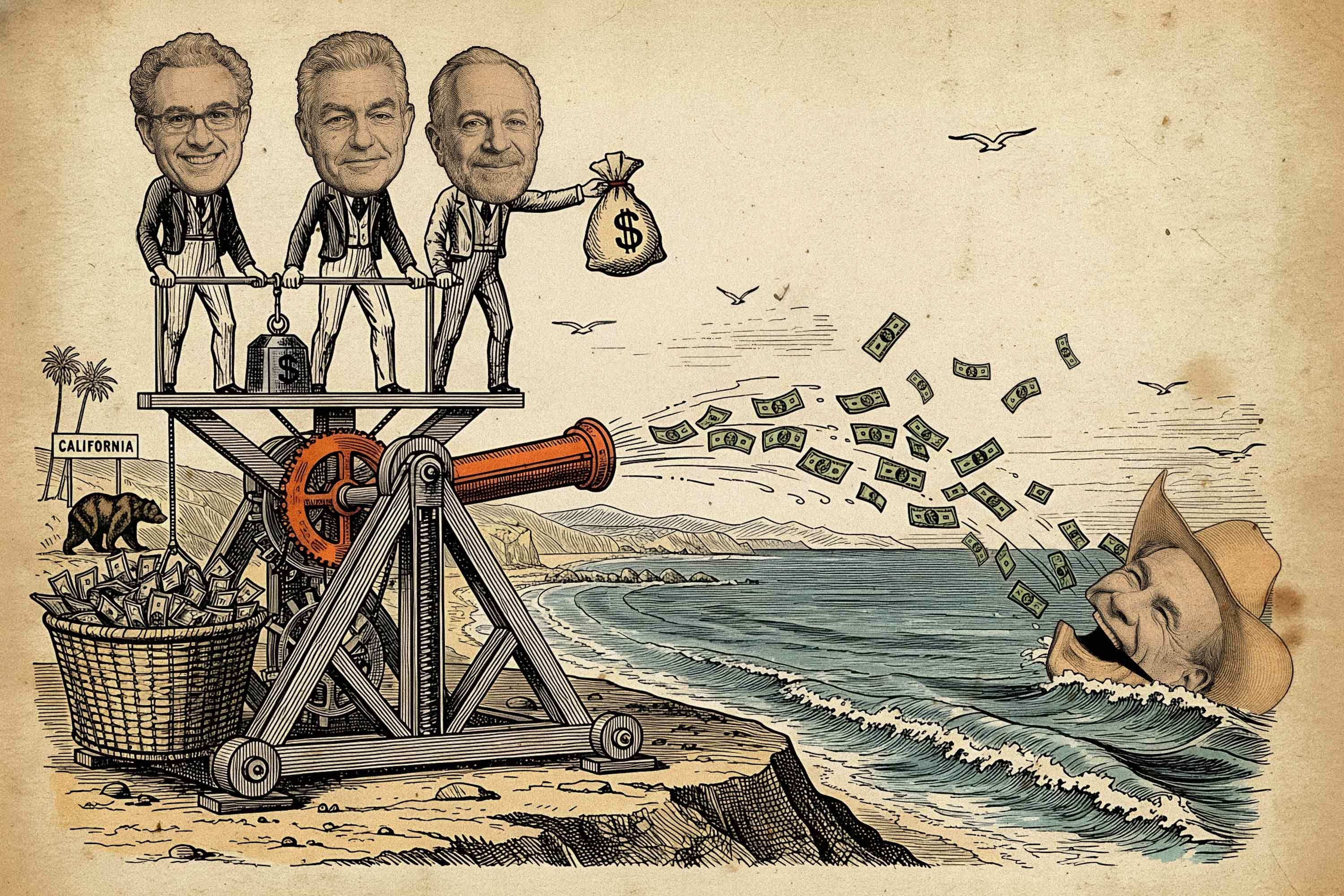
A few weeks back, I asked 21 California billionaires targeted by the Service Employees International Union’s proposed wealth tax if they planned to fight the ballot proposition, move, or some mysterious third thing. Sentiment was darker than I anticipated. Almost everyone I spoke with, including the California maximalists, was planning an exit. While the architects of the ballot prop insisted “wealth flight” would never happen — there was research, we were told; trust the experts!, the commies cried — it was clear by the end of January they were not only wrong about this, but about pretty much everything. To date, at least half the wealth targeted by the SEIU’s Dave Regan and his cabal of Marxist academics has moved from California, the SEIU has alienated the governor, the teacher’s union (from what I’ve repeatedly heard), and most center-left organizations in the state, and they’ve radicalized even center left billionaires against special interests to a degree I’ve never before seen. To put this in perspective, I know a billionaire tech founder who supported Chesa Boudin, San Francisco’s infamous pro-crime District Attorney, who is now prepared for war with every union in the state.
But will a few angry billionaires be enough to avert catastrophe?
Even last year, everyone agreed a “billionaire tax” would almost certainly pass if it landed on ballots, regardless of what that meant for the concept of private property (effectively abolished), or what would happen once the proposition was turned on the rest of us (dystopia). What was less clear as late as last month was what kind of chance the proposition had of gathering enough signatures and winding up on the ballot, and how the technology industry, which the political left is obviously targeting with a disproportionate focus on privately-held startups, would fight back — or if industry leaders would fight back at all.
Today, we have interesting updates on both fronts, and, incredibly, some reason for optimism. The counter measures these men cooked up are wild, designed not only to defeat the SEIU’s tech industry kill switch, but to rain down sulfur on the heads of Atlas Shrugged villains throughout the state. I have maybe never been this excited to vote, and we’re about to share a detailed first look at the billionaire counterstrike.
But before we turn to the new ballot measures, a quick update on the wealth tax:
Assuming the SEIU is still targeting the November 2026 ballot, signatures for the wealth tax need to be verified and certified by June 25th. Signature verification can take quite a while, so ballot prop campaigns (there are many, most are insane) are targeting end of April or early May to gather something like 1.4 million signatures for constitutional changes — a safe overshoot of the roughly 900,000 signatures required this year, which should make up for signatures tossed out during the verification process. Technically, the SEIU must submit a progress report when it gathers 25% of its target signatures, which it hasn’t yet done. This implies they’re either breaking the law, or they’re a bit behind. I’m assuming they’re just a bit behind, but, oddly, according to two groups I spoke with working on competitive ballot propositions, the SEIU was only paying signature-gatherers around $5 or $6 dollars per signature last week, about half the top rate. The union has the money to pay more. Why isn’t union leadership pumping the gas?
It’s possible Regan’s just enjoying all of the attention he’s receiving — likely, in fact, from what I hear about the man — and intends to milk this circus until 2028. I guess there’s also a thin chance he’s self-reflecting, having perhaps not anticipated the damage even just proposing the wealth tax would do to California, and he’s now planning to quietly let the ballot prop go. But these days there are enough professional Smart People pushing a wealth tax that anyone who wants to believe something wrong has plenty of cover to do so, and I sincerely doubt a man as authentically average as Dave Regan self-reflects at all.
Still, while the few signals we have in any direction kind of imply only lukewarm success for the prop, an even moderate risk of the wealth tax passing is potentially existential for the tech industry, which means it’s irrational to prepare for anything other than a union victory (not only at getting it on the ballot, but at getting the votes in November).
Subscribe now
At least a few billionaires have arrived at the same conclusion.
“When there’s a direct threat against their bottom line, they engage,” one operative I spoke with said of California businessmen. “If there’s not? It’s difficult to get them to care.”
Now, they care. And billionaire fury with the wealth tax has translated into funding for a variety of counter measures.
Let’s take a look.