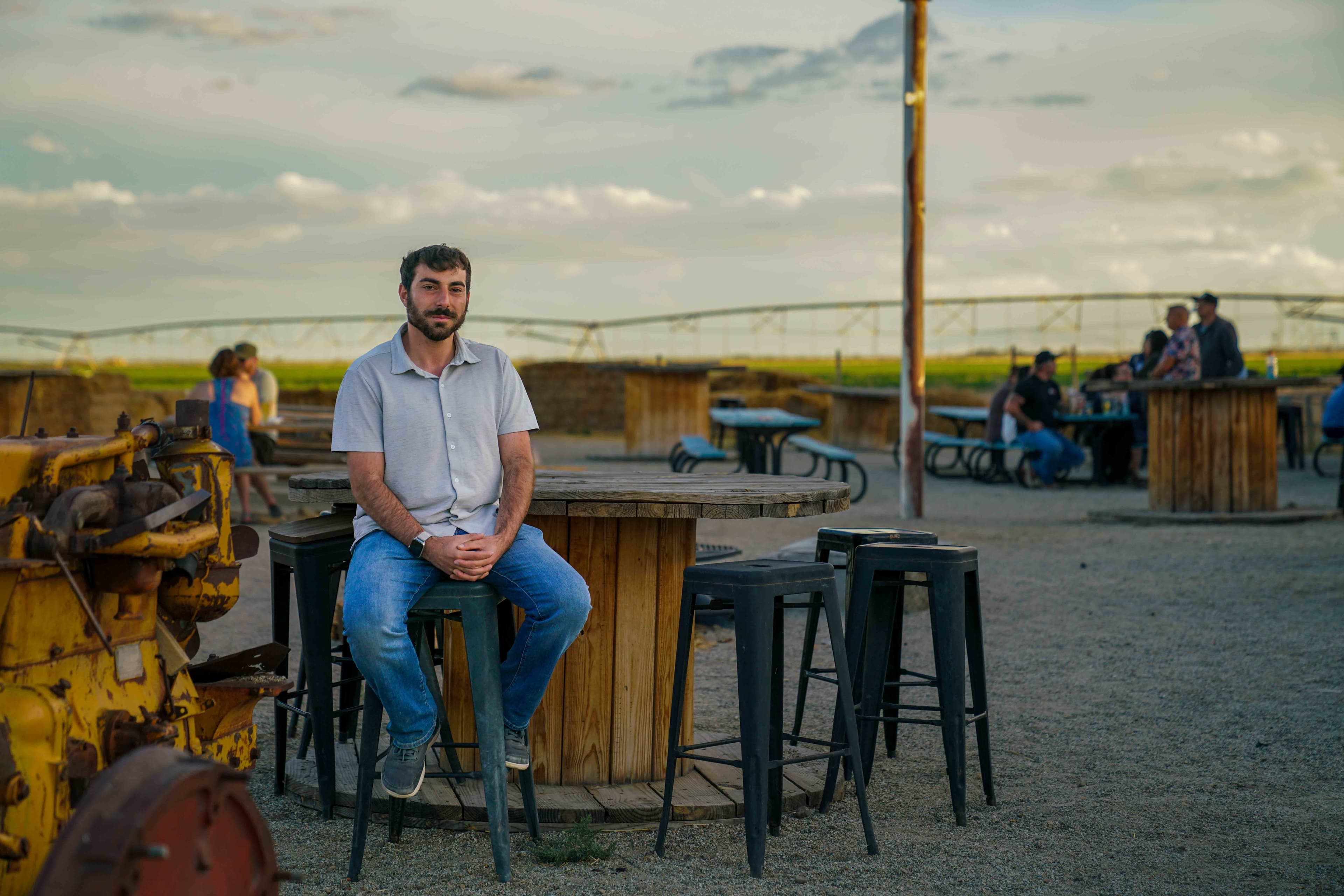
One Man’s Quest to Build a Very Small Data Center on a Remote Plot of SandOct 21
we joined a data center founder's 'listening tour' through rural colorado. it went very badly and also very well.
55 Likes
18 Comments
Oct 26, 2026
Both Nic and his firm, Castle Island, are investors in some of the companies mentioned in this study, most notably CoreWeave and Crusoe. This piece originally appeared on Nic’s Substack.
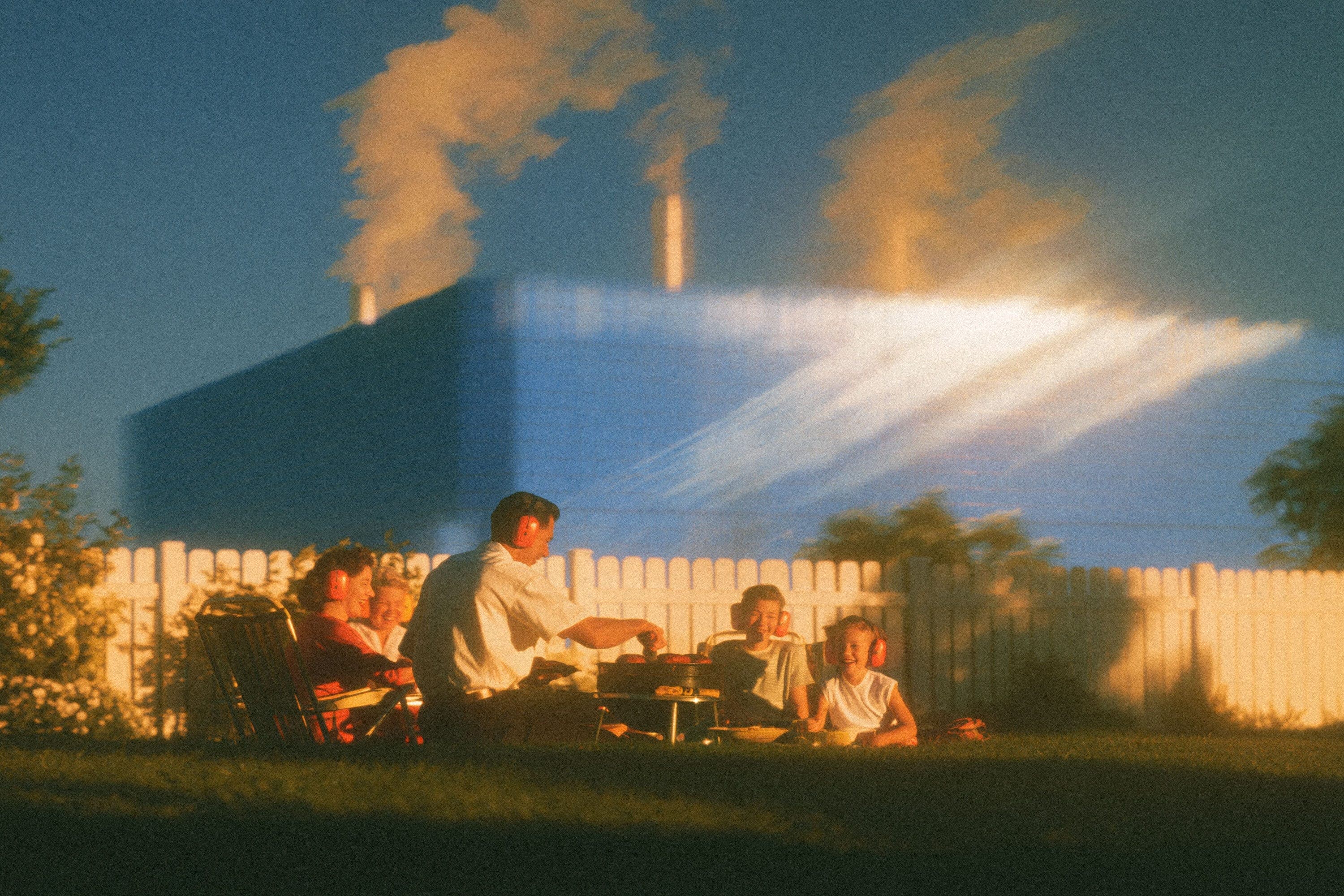
In the debate about whether data centers justify the cost and the nuisance, critics often point out differences between ordinary data centers of yesteryear and the hyperscale data centers built today.
It’s reasonable, one might suppose, to not even notice an ordinary five-megawatt Equinix data center next door, while objecting to the construction of a massive one-gigawatt data center with onsite gas-powered electricity generation.
Regarding those hyperscalers: People have a lot of complaints about them, some more valid than others, but the incontrovertible issue that strikes me as most important is neither water, nor residential electricity rates (covered here), nor any other speculative concern — but noise.
Massive industrial-scale HVAC units are loud. If the data center is going “behind the meter” and generating its own power via onsite gas turbines, that’s another noise source. Gas turbines are close cousins to literal jet engines. An unsilenced aeroderivative industrial turbine can exceed 100 dBA.
So what is the nuisance profile of America’s largest data centers?
As it turns out, despite this being an intensely political issue with a simple empirical answer, no one knows. No one has systematically studied it, as far as I can tell.
There is shockingly little data regarding the noise impact of hyperscale (let’s just define it as 100 megawatts and up) data centers. The state of Virginia took a couple measurements. Individual projects sometimes include anticipated noise estimates to satisfy local ordinances. Residents sometimes record ad hoc videos on their phones. There have been a few one-off studies of individual data centers. But there has been nothing systematic — surprising, given how easy it would be to run a noise study of America’s largest data centers.
So, because I don’t have time to personally canvass the Midwest and rust belt and set up acoustic monitoring equipment, I decided to estimate data centers’ noise footprint from satellite imagery, proximity to residential clusters, and land-use application documents. A lot of this work was done with AI, under my supervision.
For this study, I examined the 25 largest currently operating AI data center campuses in the United States (according to Epoch). For each data center, I:
Mapped the likely noise sources;
Identified the nearest cluster of at least five residences and measured the separation between them and the data center;
Devised a noise estimate based on that distance, along with other factors;
Reviewed public reports of noise complaints, litigation, and noise mitigation efforts to see if the complaint record matches estimated noise levels.
I found neither universal quiet nor universal disturbance. For 17 campuses, I found no credible current complaint attributable to ordinary operating noise. Four had limited allegations or residual concerns following mitigation efforts. Microsoft’s Fairwater Atlanta had credible noise complaints from multiple households, warranting a higher concern score. Three campuses — SpaceXAI Colossus 2 (near Memphis, TN), Meta Prometheus (in New Albany, Ohio), and Google New Albany — showed the strongest evidence of ongoing noise problems, including official acknowledgment and continuing mitigation efforts.
Those three campuses share two conspicuous characteristics: they are extremely large (over 450 MW), and the noise sources are less than 500 meters from residential clusters. Additionally, two of these three (Colossus 2 and Prometheus) have onsite power generation.
In other words: merely building a large data center is not a guarantee of creating a noise disturbance. Amazon’s New Carlisle data center, outside South Bend, IN, is the second-largest data center in the sample with 910 MW of active power. It received my lowest-reported noise concern score with virtually no public complaints.1 Larger and more resident-proximate data centers were more likely to yield community complaints, but it’s entirely possible to build a >500 MW data center within a kilometer of a population center without creating evident issues.
If the right mitigations are in place, I’ve concluded, hyperscale data centers can coexist with local populations amicably. No data center further than 800 meters from the nearest population cluster had any meaningful documented complaints. Adding “behind the meter” power generation — i.e., using natural gas turbines to generate their own electricity, as many data centers are now doing in response to concerns about residents’ power bills — increases the risk of noise annoyance. This is an irony of tech companies trying to address concerns about “using up” grid power: as they add onsite power generation, they create new issues in the form of noise.
It’s quite possible that we will witness a wave of noise complaints in the coming months if more data centers follow SpaceXAI’s Colossus 2 template and add local power generation. Community complaints, political criticism, and lawsuits are easy to predict based on the presence of gas turbines and distance to homes. In my view, data center noise is an operational challenge that can readily be mitigated, rather than an inescapable flaw of hyperscalers.
we joined a data center founder's 'listening tour' through rural colorado. it went very badly and also very well.

amid rampant data center derangement syndrome, I wanted to throw a house party to celebrate american innovation. then it went viral.

one guy is single-handedly correcting the ai water doomerism with a calculator and a chatbot
the real chokepoint in the ai race is power, and elon is betting he can generate power in space faster than our glacial bureaucracy will allow down here on earth

pirate wires #164 // if we keep building artificial intelligence, are you, and everyone you know and love, going to die?

tuesday report #10 // on the AI doomer suggestion we start bombing data centers, speculative nuclear apocalypse fan fiction revisited, and all the news you missed this week