We Are the Media NowJun 30
techcrunch’s wild spiral into madness reminds us of the stakes, a brief history of “new” media, and notes from pirate wires — what we knew, what we learned along the way, and where we’re going
Aug 4, 2026

Every morning, I log onto TikTok and scroll past a video that triggers my complex post-traumatic stress disorder. Most of these videos consist of a Zoomer skipping down Bedford Avenue to a Dirty Projectors song, past what once were Williamsburg’s hip warehouse clubs and are now Whole Foods and banks.
Caption: If I lived in Williamsburg in the 2010s and worked at Vice, I would be the happiest person on earth…
Vice would never have hired most of these Zoomers, with their straight hair and HR personalities. Vice would have made fun of them. I would know: In 2012, I was the youngest worker at Vice, making fun of such people. The company formed the most influential and traumatic years of my life.
Writing all of the trauma would take a book as long as Remembrance of Things Past. So, here’s a montage of the worst (but also funniest) moments, a montage one could easily set to an LCD Soundsystem song:
My boss taking too much Adderall and forcing me to travel America interviewing former Real Housewives.
The same boss offering me a bag of cocaine, then apologizing, remembering I was sober.
One of Vice’s business girlbosses buying me poppers for Christmas.
Shane Smith, our CEO, throwing $1 million dollars in cash at the staff.
The HR woman, who exclusively wore white leather and was known around the office as “Lady Miramax” because she’d led Harvey Weinstein’s HR department.
My boss standing on top of a boardroom table, high, screaming, “NEXT YEAR WE DEFEAT ISIS!”
Shane Smith turning off the office wifi because he “needed to Skype with a member of ISIS.”
Shane Smith ordering a German executive to lock the staff in an attic so we would no longer write about bestiality because it offended Gloria Steinem and the CEO of Google when Shane sailed with them on a yacht.
One of the associate editors forcing me to write about gay sex and/or review a sex toy whenever traffic dipped.
An associate editor adding sexual jokes and cultural references I did not believe, let alone understand half the time, into my articles.
An associate editor snorting too much blow and fist-fighting our boss.
An associate editor going woke and calling me a white supremacist because I called a fat white lady… fat.
A hooker driving her car into our photographer outside IHOP.
A Real Housewife driving her BMW into the same photographer outside an Atlanta hotel.
A juggalo on PCP threatening to kill me in an RV in the middle of rural Ohio.
Aaron Carter, high on meth, threatening to kill me. (RIP.)
Aaron Carter, again high on meth, FaceTiming me about Los Angeles County towing his car.
HR sending an email reminding everyone to remove their drugs from the office before a Secret Service sweep ahead of Joe Biden’s visit.
The list goes on. The memories stare me in the face daily, because the youth are already nostalgic for my youth — which never actually existed outside of their imaginations.
Zoomers think Vice — the magazine, founded in 1994, that basically created early-2010s hipster Americana — was the Y2K equivalent of Patti Smith’s Just Kids, the Chelsea Hotel replaced by the Wythe. They aren’t alone. Lately, a cottage industry of “experts” has emerged in an attempt to answer the question: What was Vice?
A Pulitzer-nominated journalist at the New York Times reports that Vice was a typical corporation, albeit one with a sexual harassment epidemic. New York Magazine depicts Shane Smith as some sort of Ponzi-scheme confidence man — however, if you know anything about Shane, you know he was really just a bullshitter, and by the time Disney invested $400m in Vice, he believed his shit smelled good.
Former Vice freelancer Eddie Huang produced a documentary-length answer to this question, though as a non-employee he knew little of what was actually happening inside the company. (As anyone who sat in the editorial pit knew, Vice saw a major difference between staffers and freelancers. The hipster snobs earning $27,000/year looked down on the freelancers they paid pennies a word.)
To actually understand what Vice was, you had to have sat in our dusty white Williamsburg warehouse, where dildos flew over your head, weed smoke filtered through the vents, and, occasionally, your 40-something-year-old aging punk co-worker would show up with members of the Bloods, who stole your computer.
Those 40-something-year-old aging punks (at least one of whom was a literal crackhead) ran a bizarre business. The world knew Vice for its HBO show, magazine, viral documentaries, and Vice.com, a textual prelude to the “manosphere” — but the company operated a vast array of side hustles. Shane licensed the magazine all over the world (almost every week, it seemed, we’d discover a new Vice office in an Eastern Bloc country) and sold sponsorships to blue-chip corporations. (For instance, Unilever paid $20 million a year to sponsor a women’s vertical called Broadly.)
Shane theorized that Vice would eventually dominate every genre and medium, from the internet to cable TV to film. But selling so many products confused audiences, and you can only con Unilever and other advertisers into sponsoring shiny new verticals so many times.
Mostly: Vice was a cult. It was also one of the best business schools in modern history. Today, as a successful entrepreneur, I think about it all the time.
I first walked into the Vice office on North 11th Street in 2012.
At the time, I barely knew what Vice was. As a Sarah Lawrence sophomore, I applied to every magazine internship I could find until a skater boy from high school recommended Vice. I vaguely remembered straight guys reading the magazine in high school and sluts grabbing free copies from American Apparel. I dashed off an unhinged cover letter about how my family owned puppy mills and, therefore, I had a unique P.O.V. and white trash work ethic.
It was all I had to say. I did not yet know this was very Vice.
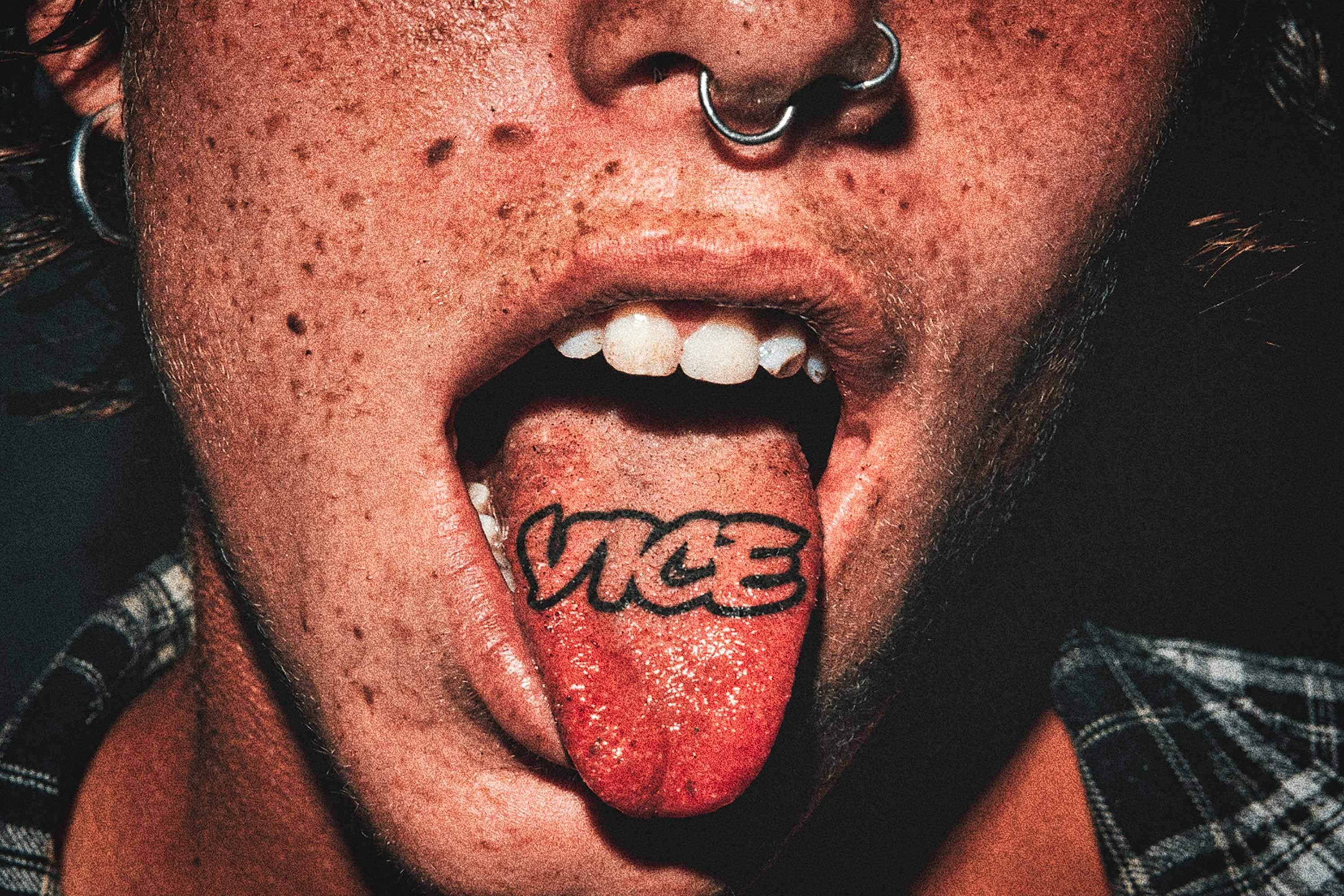
An associate editor emailed me. I took the Metro-North, then the subway, to Williamsburg, where the editor interviewed me on the sidewalk under a neon “Vice” sign — the classic logo, which was Gavin McInnes’ handwriting.
Voila. “You’re hired.”
Everyone at Vice was a sociopath, nerd, or weirdo. I was weird enough.
Weeks later, an HR guy led me under the neon sign, up creaky stairs, past rows of video editing bays, accountants, and a taxidermied bear into a crowded back office filled with cardboard boxes. This was the dumpy editorial bay — the heart of the company. (Every team, except ours, had real office space.)
“Your job is to do what we say,” the associate editor told me. “You will transcribe. You will write blog posts. And you should get to know the old Vice issues...”
He pointed at cardboard white boxes stuffed with old magazines, as if they were junk.
“Who started Vice?” I asked an intern next to me.
“Shane and Suroosh,” he said, before whispering, “and he-who-must-not-be-named.”
The Voldemort of North 11th Street was Gavin McInnes, the Proud Boys founder who would, a few years later, be banned from Instagram, Twitter, Facebook, and YouTube for “hate speech” and promoting “violent extremism.” An editor whispered to me that Gavin had edited, assigned, and in some cases ghostwritten every issue from 1995 to roughly 2006 — so, through the summer, I took those boxes off the shelves and devoured every issue. I found Leslie Arfin’s “Dear Diary” column. Ryan McGinley’s early photos of skater twinks. Terry Richardson’s dick pics. Reviews of the Yeah Yeah Yeahs. A profile of Billy Corgan. Gavin had even brought skinny jeans from Montreal (where he cofounded Vice) to Williamsburg, via the magazine.
Here was nearly 20 years of American hipster culture, all set in motion by he-who-must-not-be-named.
Sorry, why couldn’t we discuss the man?
I was confused until, one day, I pulled up a 2004 issue and gasped. A KKK member was posing on the cover. Inside, members of various minority groups had written diatribes against other minority groups. Queer filmmaking legend Bruce LaBruce’s contribution: “I Hate Straights.” (“Forget about fag bashing,” Bruce wrote. “It’s time for a little equal opportunity straight bashing.”)
It was called “the Hate Issue.”

Re-reading this issue in 2026, it’s obvious that Gavin was more complicated than people remember. He once told the New York Times, “I love being white and I think it’s something to be very proud of.” But, at the same time, he was empowering minorities, from gays to blacks, to be just as proud — and, to a certain extent, as proudly dickish — as him.
You have to wonder: If Shane hadn’t booted Gavin, if the public hadn’t “canceled” him, would he have aged into a very different man? (In 2004, it was pretty radical, and some may say woke, for a breeder like Gavin to publish “I Hate Straights.”)
The Hate Issue was the genius and horror of Gavin in one package.
Over time, I would learn that Shane loathed how Gavin’s antics sucked up all the attention, which is why he’d relegated editorial to the worst part of the office. He then peeled away Gavin’s worst quality (racism), scrubbing Vice’s image so he could sell bits of the company to Fortune 500 companies. (Disney, 21st Century Fox, TPG Capital, and others all eventually bought stakes in Vice.)
Meanwhile, after he was ejected by Shane in 2008, Gavin contributed to Fox News and Thought Catalog until his ironic racist and transphobic jokes blossomed into what some viewed as straight-up prejudice. (His Thought Catalog piece, “Transphobia Is Perfectly Natural,” in 2014, got him fired from his dayjob as head of an ad agency. He also published pieces titled “When Is It OK to Hit a Woman?” and “Having Kids Turns You Into a Complete Fag.”)
Booted off the airwaves, in 2016 he founded the Proud Boys, a nationalist organization of “proud western chauvinists.”
Some saw this as a shocking evolution. How can you go from popularizing skinny jeans and hyping up LCD Soundsystem to leading the group that staged January 6?
But looking back at those old issues, I can’t think of anything more “old Vice” than a gay guy in a Viking helmet storming the Capitol while his comrade shits on Nancy Pelosi’s desk.
Anyway. By 2012, Gavin was gone, the company was (less) racist, and we had no idea what Gavin would eventually become. He was still the bleeding, coke-filled, neon heart of the company — even though our CEO hated him.
My first week on the job, two older editors (by which I mean, 25-year-olds) tossed dildos back and forth over the interns’ heads. The 21-year-old music managing editor brought back the female rapper Kitty Pryde, whom she was fucking. A male video editor vented about someone anonymously Gchatting him asking to have gay sex. (He later complained to HR and learned it was the HR director who’d been Gchatting him.)
Each day, the associate editor sent an intern (me) out for a man-on-the-street “question of the day.” Most of the time, these questions were mundane. I’d walk around, asking strangers a silly question, then write it up as filler for the blog.
One day, the associate editor smirked at me. “Would you ask people if they’re gay?”
“Sure,” I said.
He pushed his chair back, expecting me to resist — but, as a 20-year-old, I was what Kathleen at my current company calls “all quiet on the frontal lobe.” My brain’s ability to evaluate risk had yet to form.
I grabbed my recorder and rode the subway to Times Square, where I asked a butch Tristate bro, “How would you define straight?”
“I don’t know. I’m not gay,” he said.
“Then why are you standing outside Forever 21?” I asked.
It was ballsy, it was funny, it was classic Vice — it was also kind of dangerous. In 2012, ask the wrong guy in Midtown if they’re gay and you’d get punched.
But I didn’t realize that then. I wrote the article, Gchatted it to my boss, and he published it.
He kept the assignments rolling. I was thrilled.
I pitched the craziest ideas (the month I graduated from Sarah Lawrence, I pitched, “Let’s have a crackhead smoke my diploma — a perfect metaphor for a college education in the 2010s!”). Editors invited me to smoke a blunt in Shane’s screening room and watch Octomom’s porno when the office was closed. Several nights, the female writers let me hold their hair back as they snorted lines. Team bonding!
I was having the time of my life. I was also an unsupervised glorified child.
At the end of my internship, the editor-in-chief asked me to freelance while I was studying abroad at Oxford. “You have more balls than the straight guys on staff,” he cackled. “You’ll do anything!”
Anything, I did.
While abroad, I reviewed a gay sex bathhouse renting space from the Vatican. I penned a longread about the HIV-positive lyricist behind Disney’s The Little Mermaid. And I wrote a personal essay that was my first foray into being canceled.
At Oxford, I quickly fell for a boy named Charles. He’d reject my advances, then make out with me, then go into drunk tirades about old money British politics. I’d tweeted that the Oxford gay scene was the worst circle jerk, and my editor DMed me, asking me to turn it into an essay. I jumped at the chance, unaware that Vice was bigger in the UK, and the piece — in which I described Oxford’s gay guys as, basically, arrogant and closeted assholes — went viral. As soon as it blew up, I became persona non grata at Oxford. Charles punched me. The school newspaper listed me as the first American on their “most hated student list.” (I’m still one of the first search results for gay life at Oxford.)
It was traumatic. I didn’t realize the price of writing online — my editors did, but they let me hang myself. Hanging myself meant traffic.
An adult would have recognized my editors’ mistakes and run. Not me.
Freelancing abroad turned into working as Vice’s weekend editor my senior year; every weekend, from my Sarah Lawrence dorm, I assigned, edited, copyedited, and fact-checked roughly 14 articles while running Vice’s social media accounts. Often, C-suite executives would call me asking for site changes. They couldn’t make changes themselves because they didn’t have the password. They’d given it to a 21-year-old.
While I helped run Vice, Shane traveled the world, selling the company he claimed had cracked the code to making millions via “new media.” Over 20 million people were visiting the site each month, and HBO had gifted us a weekly show. A year after my internship, Rupert Murdoch paid $70 million for a five percent stake in the company, which was valued at $1.4 billion in 2013. When the Financial Times announced the Murdoch deal, Shane told them, “I want us to be the next MTV, ESPN and CNN rolled into one — and everyone always rolls their eyes.”
Rumors spread of Disney trying to buy Vice (they’d recently acquired Marvel and Lucasfilm). Others claimed Shane might go public. Meanwhile, Vice was relying on me — a college student — and my drug-addicted 25-year-old editors for content.
Looking back, I wonder: did the investors know how much power Shane granted his children? Probably not. I doubt they knew until the company went belly-up.
One weekend, I was on a date with a cute wasian twink when my phone rang. It was an executive. The Syrian Electronic Army had hacked Vice’s website on a weekend. They needed me to alter the homepage.
“I have to leave,” I told my date. “The Syrians hacked my employer.”
“And they’re having you deal with it?”
“It’s Vice.”
“Isn’t that a billion-dollar company?”
A week after graduation, in May 2014, I signed up to work full-time at Vice.
In retrospect, it was like signing a death pact.
Taking the job coincided with a slew of investments. First came the aforementioned Murdoch deal. That summer, rumors spread of Time Warner buying the company. But instead, A&E, and then Disney, invested $650 million total in the company, and its valuation ballooned to $4.5 billion.
I presumed our investors had access to the same data as me (as weekend editor, I was one of the only people on staff with access to traffic reports). I was shocked Time Warner liked gay sex and trolling articles about Paris Hilton’s musical genius as much as our audience, but the world can surprise you!
At the Christmas party that year, people marched in carrying cardboard boxes filled with cash. Shane basically threw $1 million cash at us, in envelopes. If you didn’t get an envelope, you could ask Lady Miramax for one after the party. (Each envelope contained $1,500).
“Who will be first to call ‘the guy’?” (for coke), Shane asked aloud.
Around the same time, I remember standing in a massive white room in our North 11th Street office, overstuffed with people to the point that it was definitely a safety violation, as Shane announced that all the old-timers would soon be millionaires.
(Many of those early employees did not end up becoming millionaires, btw.)
Some worried old Hollywood would stamp the Vice out of Vice, but the investors knew what they were buying. Looking back, the problem wasn’t our new investors — it was Shane.
Unlike Rupert Murdoch, Shane didn’t follow metrics; instead, the man chased headlines about himself. The music editors once complained that he went apoplectic after reading tweets making fun of how Vice had declared Jimi Hendrix overrated. By the time Teen Vogue went woke in late 2016, Shane was panicking that they’d taken our place in culture. In response, he started asking us for woke headlines… about himself.
It bothered Shane that media reporters still portrayed Vice as “bro-ey,” the word thrown around the office to summarize the criticism. Shane was not confident enough in his manhood, or his product, to read the traffic and gender data and recognize that he owned a piece of what people would call, in an election eight years later, “the manosphere.”
Shortly after Trump won, older editors (by which I mean people in their early 30s), told me that Shane would scream in jealousy about Teen Vogue’s positive press.
Today, we would call this “going woke.”
At Vice, woke came to mean you could write about gay activism, but not the defining features of homosexuals (gay sex and praising D-list celebrities).
Editorial began publishing articles like “How Alicia Keys Reclaimed Herself to Get ‘HERE’” and “Conde Nast Bought Pitchfork. But the Moral of the Story Is ‘Millennial Males.’”
On top of this bullshit, Shane continued to alienate editorial (the team that had made the company famous), while building a… cable network. No one on staff subscribed to cable, but Shane let his Gen X memories of what mattered to him as a teen (TV) eclipse common business sense. He burned hundreds of millions of dollars, reportedly, on a cable TV channel with only ~106,000 viewers.
Many millennials today suffer from Shane’s problem. They idolize old media because they once read magazines on the floor of Barnes & Noble, ignoring the cold reality of media industry numbers today. They suffer from “millennial brain.”
It’s easy to assume Shane prioritized investors over his customers — but in retrospect, I struggle to believe that Murdoch, Bob Iger, and HBO honchos bought Vice wanting it to change. What would have been the point? From their perspective, they were launching one final attempt at dragging young people into cable TV. The cable bundle, to this day, is far more profitable than streaming. Vice seemed like a decent last-ditch effort.
Steering the company away from what had made Vice Vice — our irreverence, the fuck-it spirit that led us to put a literal Klan member on the cover, everything Gavin stood for — seemed to stem from Shane and his acolytes.
The founders, not the investors, killed the company.
And the founder was wrong. Being “bro-ey” and irreverent was our best asset but Shane abandoned it when culture changed. Meanwhile, Barstool and Outkick stuck to their brand, ignored the hate, and sold.
It was an early lesson: Ignore the haters and focus on your fans.
Between 2012 and 2017, my role at Vice kept changing. Eventually, in a story that has been told everywhere from the New York Times to the Sydney Morning Herald, Vice put me in charge of attracting “hate traffic.” I started sending right-wingers our woke articles so they could mock them. Reviewing my profile of Rachel Dolezal, Milo Yiannopoulos wrote in Breitbart, “The interview is drenched in self-pity… read the whole profile… if you have a nose peg and/or sick bucket to hand.” (Thank you, Milo.)
Traffic spiked for articles I wrote, edited, and planted among my right-wing friends — but overall, people whispered about fewer concurrent visitors appearing on Chartbeat, an app that tracked our traffic in real time. Shane seemed unaware of this and continued to spend like crazy, expanding the business in ways that confused the general public. Why was Vice launching a cable channel… and a daily news show on HBO?
Vice needed right-wing hate traffic to keep the numbers up. My superiors, from the editor-in-chief to the managing editor, kept asking me to keep bringing it in — until one of my emails planting a story with a right-wing journalist was leaked. Then, Vice fired me. They told the press they had no idea about all the right-wing hate traffic I’d been bringing them.
“We are shocked and disappointed,” Vice told BuzzFeed, “We just learned about this and have begun a formal review into the matter.”
Vice sacrificed me, as cults do.
I was doxxed. I was unemployed. It was a nightmare.
Six years later, in 2023, Vice went bankrupt. I ended up founding a PR company, picking up several high-profile clients, and watching from a distance as Vice slowly died.
After I left Vice, the company installed Nancy Dubuc (the A&E moron who’d invested millions into peak Vice) as CEO. Every few months, this glorified HR woman rushed to the press to announce some silly reorganization. Vice reorganized and reorganized until it went bankrupt and was sold to Fortress, a Soros-backed debt holder.
The company’s death was excruciatingly slow. Some days, I wished someone would just pull the plug on Vice — it was like the Terri Schiavo of digital media.
How much cooler would it have been, how much more Vice, if it had exploded in spectacular style? Surely, we would’ve gotten a much more entertaining documentary than Eddie Huang’s Mubi slop.
Fortress chopped Vice into bits. Today, while Vice Studios continues to produce television, Shane Smith creates Vice News videos and Fortress licenses the Vice brand to an online publisher (“Savage Ventures,” which operates Vice.com).
And, ironically, I’ve recently encountered parts of the new Vice. Kev Kharas, its new editor, has published several articles about my PR firm’s clients (who today include Candace Owens, Clavicular, Adam Friedland, Andrew Callaghan, Buck Sexton, Brett Cooper, Clay Travis, and Steven Crowder). He’s smart and seems to know what made Vice Vice in the first place — honestly, I would do their PR (if they have a budget).
The same can’t be said for Shane. Two years ago, Shane’s team reached out to ask if my conservative podcast clients would appear on his flailing YouTube show.
That whole ‘firing me’ thing was a misunderstanding, Shane’s producer said. Shane was, in fact, a Republican this whole time!
But while Shane was chasing woke throughout the 2010s… Joe Rogan, the Tate Brothers, and many others stole what was once Vice’s audience. Vice became irrelevant. A relic.
“My clients don’t know who Shane is,” I told the producer. They don’t know what Vice was; they don’t care. (Suffice to say, he will not be interviewing my clients.)
Getting fired was the best thing to happen to me. While Vice burned, I created a PR company based on my correct thesis of media.
Today, I use the lessons I learned at Vice every day. As my company grows, I try to maintain the irreverent spirit that made us — and our clients — successful. I monitor my new hires like a hawk. I walk my staff through risk. I grow slowly.
Here, 10 key business lessons from Vice:
Ignore the haters, focus on your base.
From the age of PT Barnum to MTV to Gavin McInnes to Kick streamers, American pop culture loves irreverence.
Give your young staff experience, gradually.
Supervise new hires as they take risks.
Save money, don’t overspend.
Don’t seek investors over customers.
Don’t get trapped in millennial brain. Live in the present.
Remember what made you successful in the first place.
Don’t let personal grievances make you ignore common-sense business moves. (It’s okay to focus on editorial even if Gavin once ran it, Shane!)
Treat people well.
Living through a media disaster made me a better business owner. Now, when I hear people talk about their first jobs, I have no idea what they’re talking about. It’s all too safe. Everyone’s too coddled. Nobody understands.
Well, nearly nobody. One night, a few years back, at a restaurant in Washington, DC, I met a girl. I described what happened at Vice. She nodded.
“I understand completely,” she said. “I was in a theatre troupe that fell apart, and it was just like Vice. Nobody understood!”
We became friends. Months later, I asked the name of her group. “NXIVM,” she said. So, a literal famous sex cult.
Of course she understood Vice. Vice was a cult and the best business school on earth.
— Mitchell Jackson