One Man’s Quest to Build a Very Small Data Center on a Remote Plot of SandOct 21
we joined a data center founder's 'listening tour' through rural colorado. it went very badly and also very well.
32 Likes
9 Comments
Oct 21, 2026

It’s been a depressing couple of years for my mid-20s male friend Aaron (a pseudonym), who moved to SF to build his AI startup. Accustomed to an abundance of “beautiful girls” in Los Angeles, where he’d spent the previous four years, Aaron was shocked to discover that his new city appeared to have literally zero women of suitable pedigree.
San Francisco, while architecturally beautiful, is infamous for attracting unattractive people. It was built for the Vidwats and Kevins of the world — engineers and coders — for whom the only nice pair of tits they’ve ever seen belong to Sydney Sweeney (courtesy of Novig).
How bad could it possibly have been, I asked.
“Drier than the desert in my homeland,” lamented Aaron, an Egyptian who, by 2025, had practically given up on going out altogether. The best he could find in the Marina (SF’s going-out spot for the youth) was an SF 6 out of 10, equivalent to a New York -1.
Then came Summer 2026.
“We decided to give the social scene another shot this summer and went out to the Marina. We were stunned,” he recalled. “First of all, the bars were packed. There were lines just to get inside [which was not the case a couple of months ago]. Second, there were blondes everywhere. You could feel the adrenaline again. I was like, ‘What is going on? I feel invigorated!’”
At one bar, he recognized a striking blue-eyed brunette who we’ll call Rachel. Aaron told me that, at their university, she was considered one of the most beautiful women on campus before they both graduated in 2025. What was she doing in San Francisco?
Rachel told Aaron she found a job paying roughly $160,000 a year selling data centers, something she’d known nothing about a few months earlier — and per Aaron, she had just hired another “super hot” girl to work under her. From what he gathered, Rachel was fantastic at taking rich guys to basketball games and turning them into clients.
Five other SF residents independently confirmed the sudden surplus of displaced baddies. My friend Jacob (also a pseudonym; I’ve been reading the Old Testament a lot lately) declared that “the quality of women now is magnifique,” adding that “everyone is too beautiful” to be here. Another female friend of mine was considerably less thrilled that the men had undergone no such transformation: “If you see a good one for me, send him my way.”
The first to write extensively about this trend, however, is Georgia Witchel, a New York-based writer and founder of an AI startup creating digital human twins (herself objectively hot), who declared in one viral essay posted this summer that SF was experiencing a “hot girl renaissance.”
She noticed that over the last few months, her X feed had become overrun with attractive young women announcing their moves to the city, usually accompanied with sexy selfies and vague references to working at a hot new AI startup — the name of which would not be revealed until like four posts later.
These posts routinely racked up hundreds of thousands, sometimes millions, of views, as men flocked to meet the women, make introductions, or otherwise prove useful as the babes found their footing in the city.
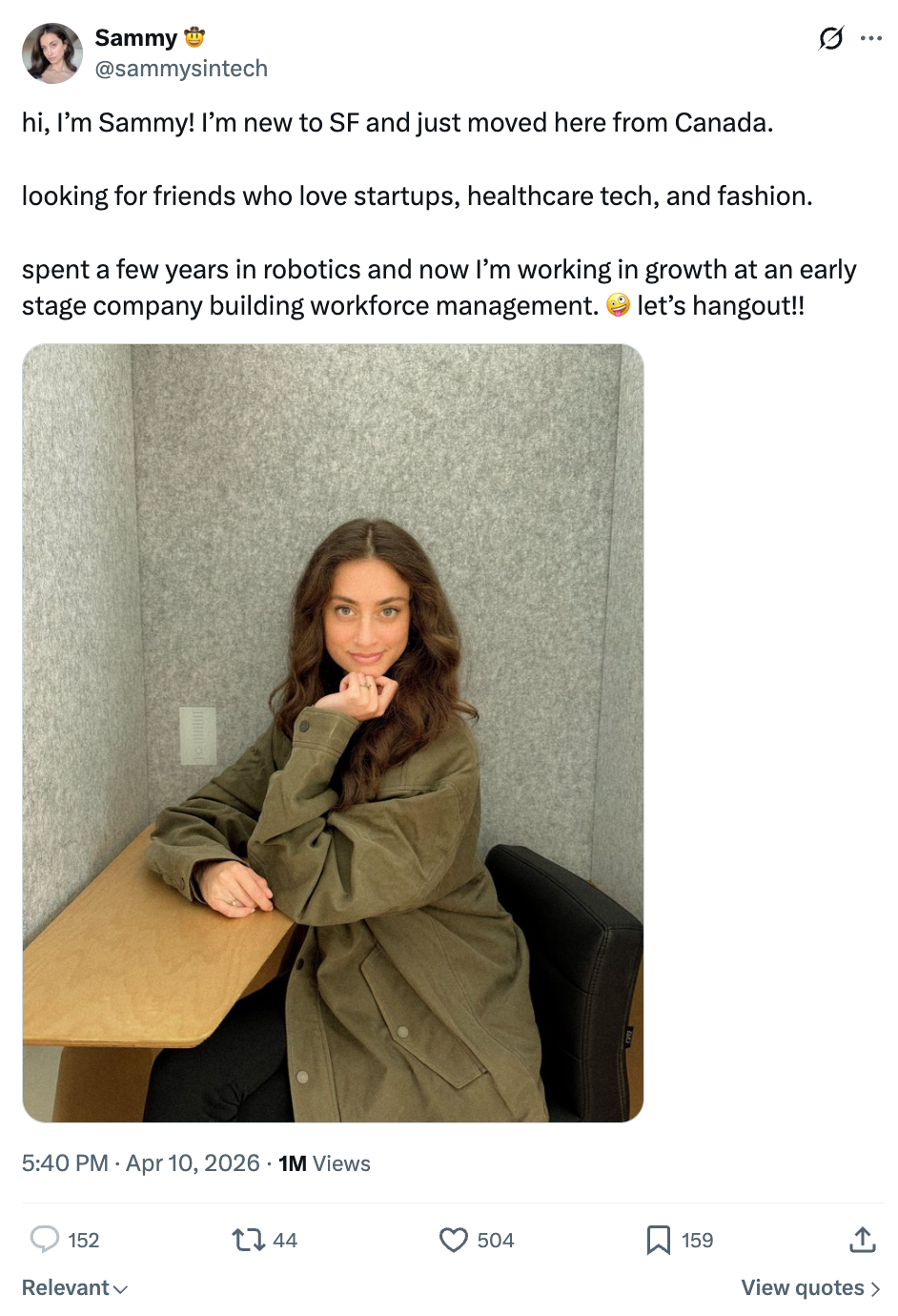
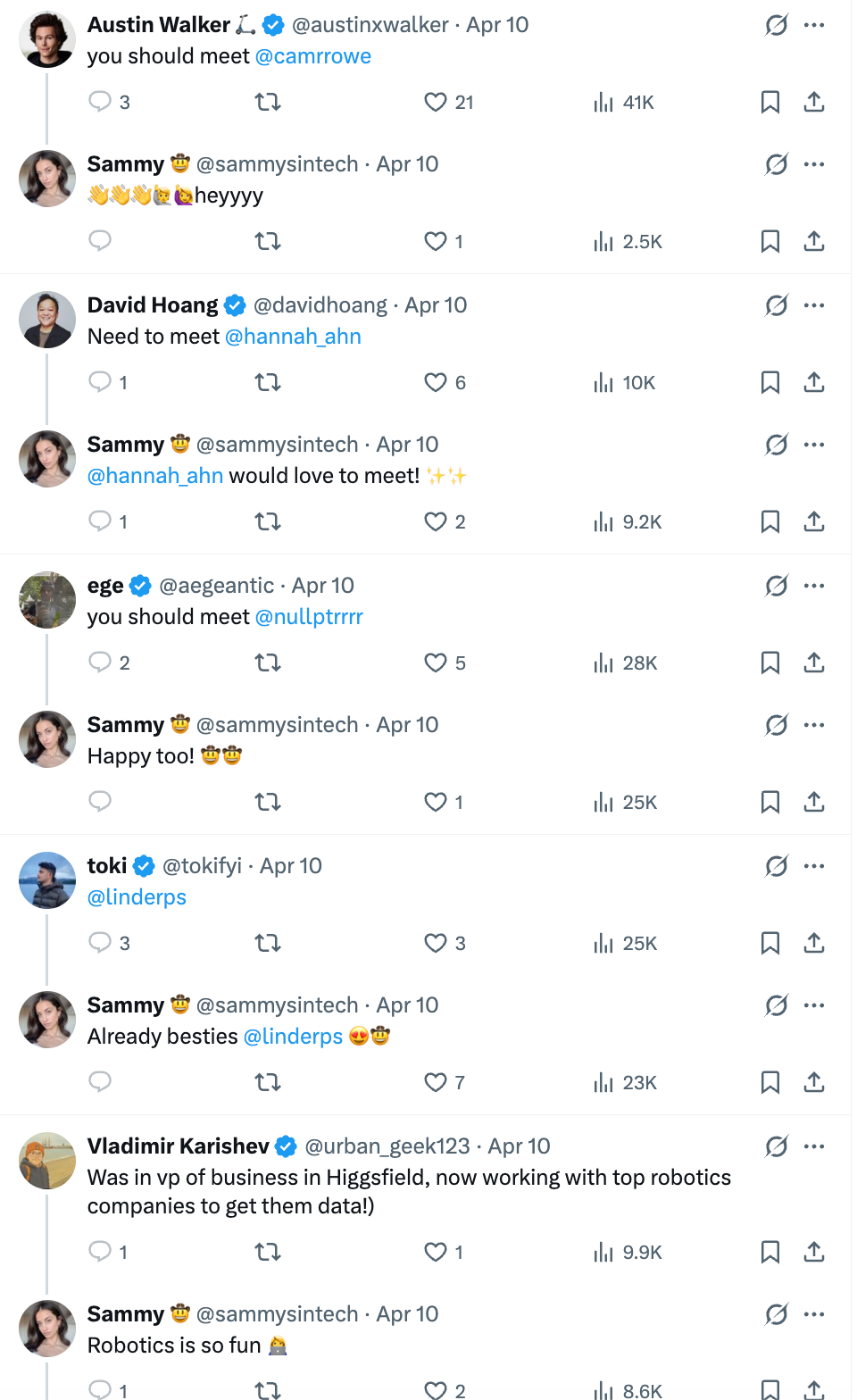
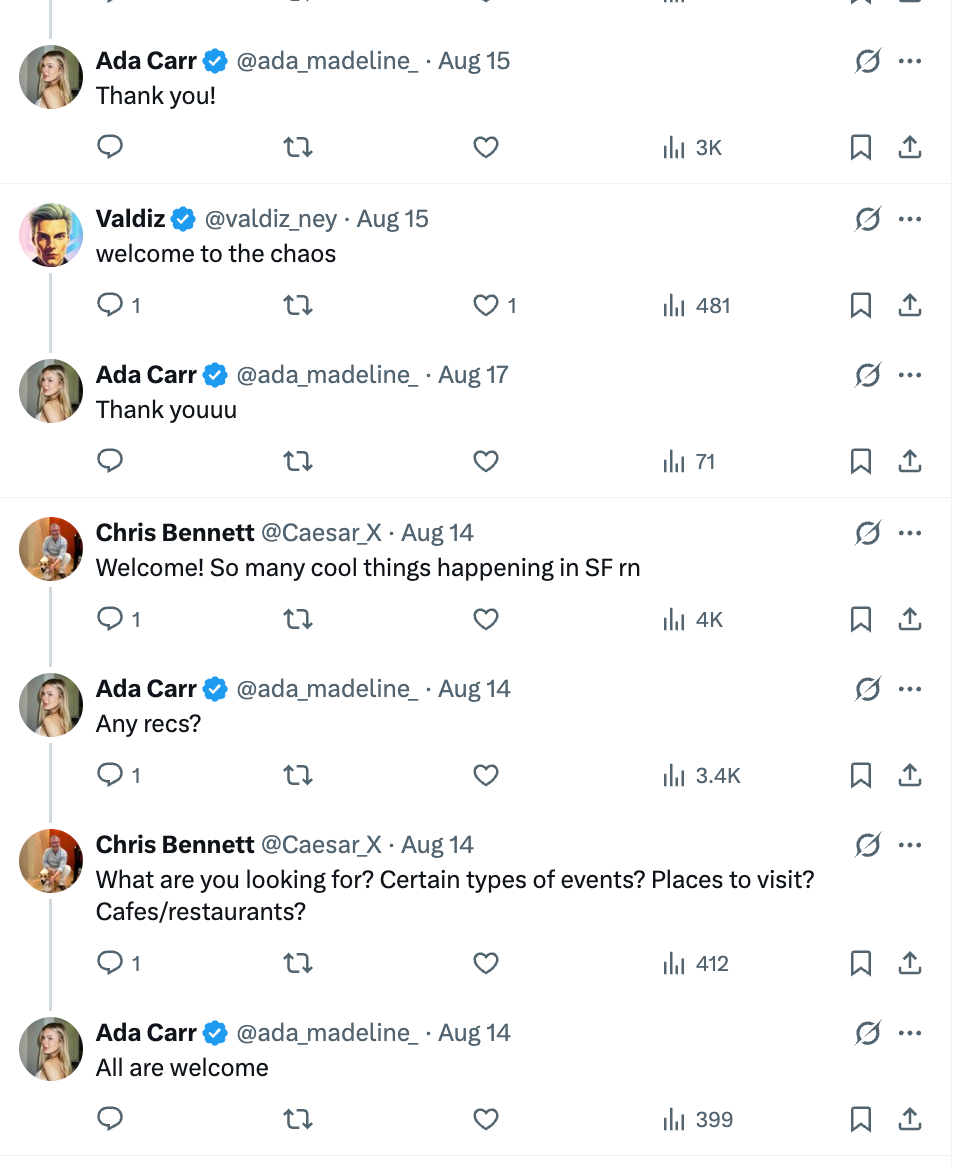
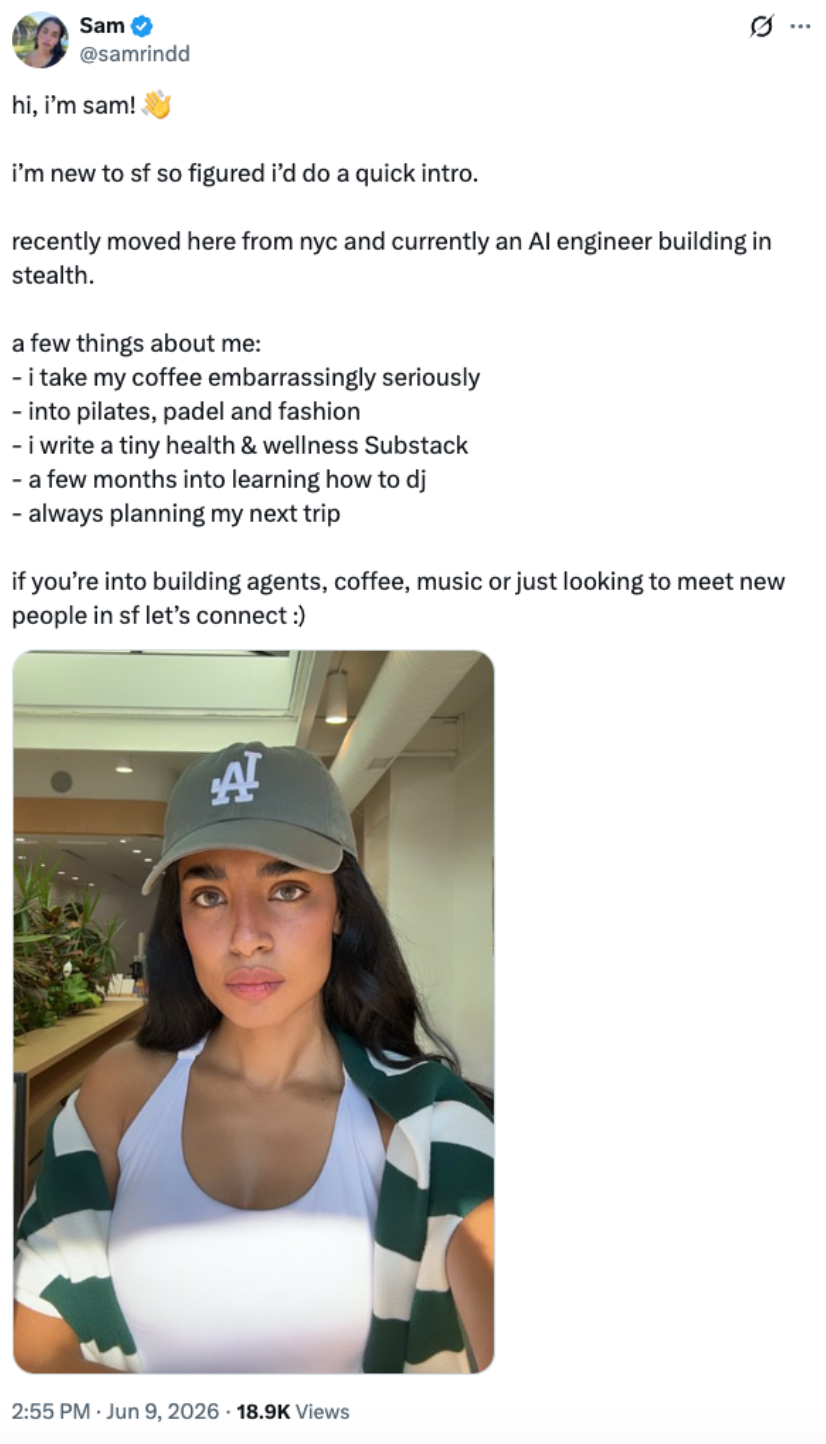
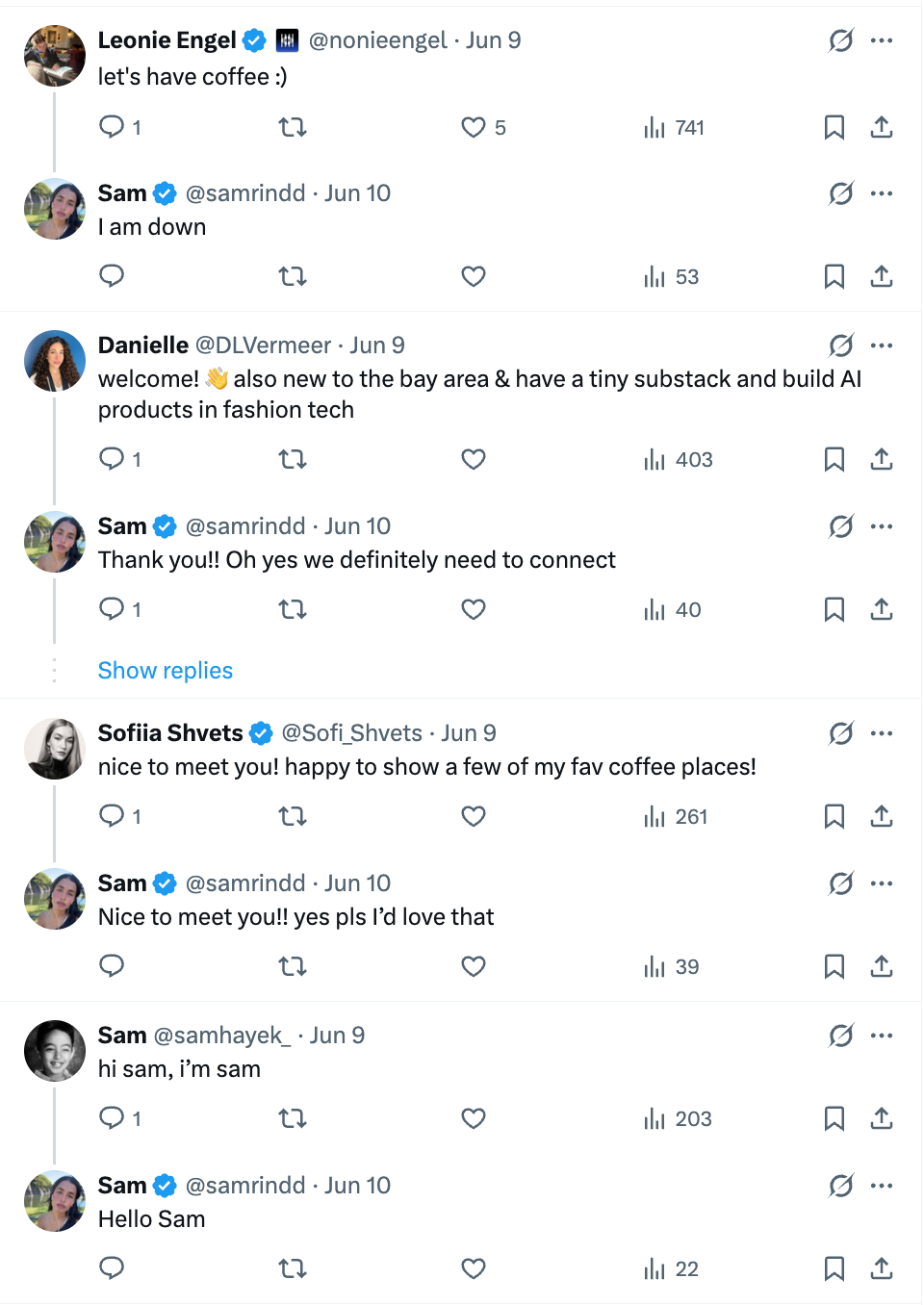
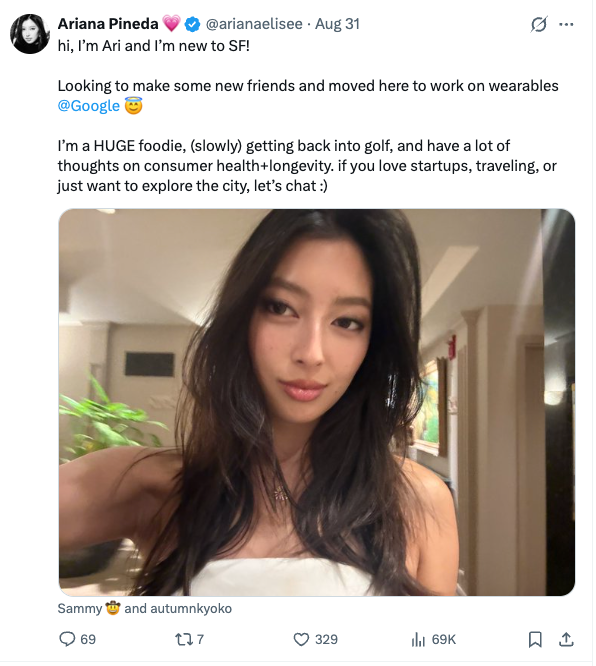
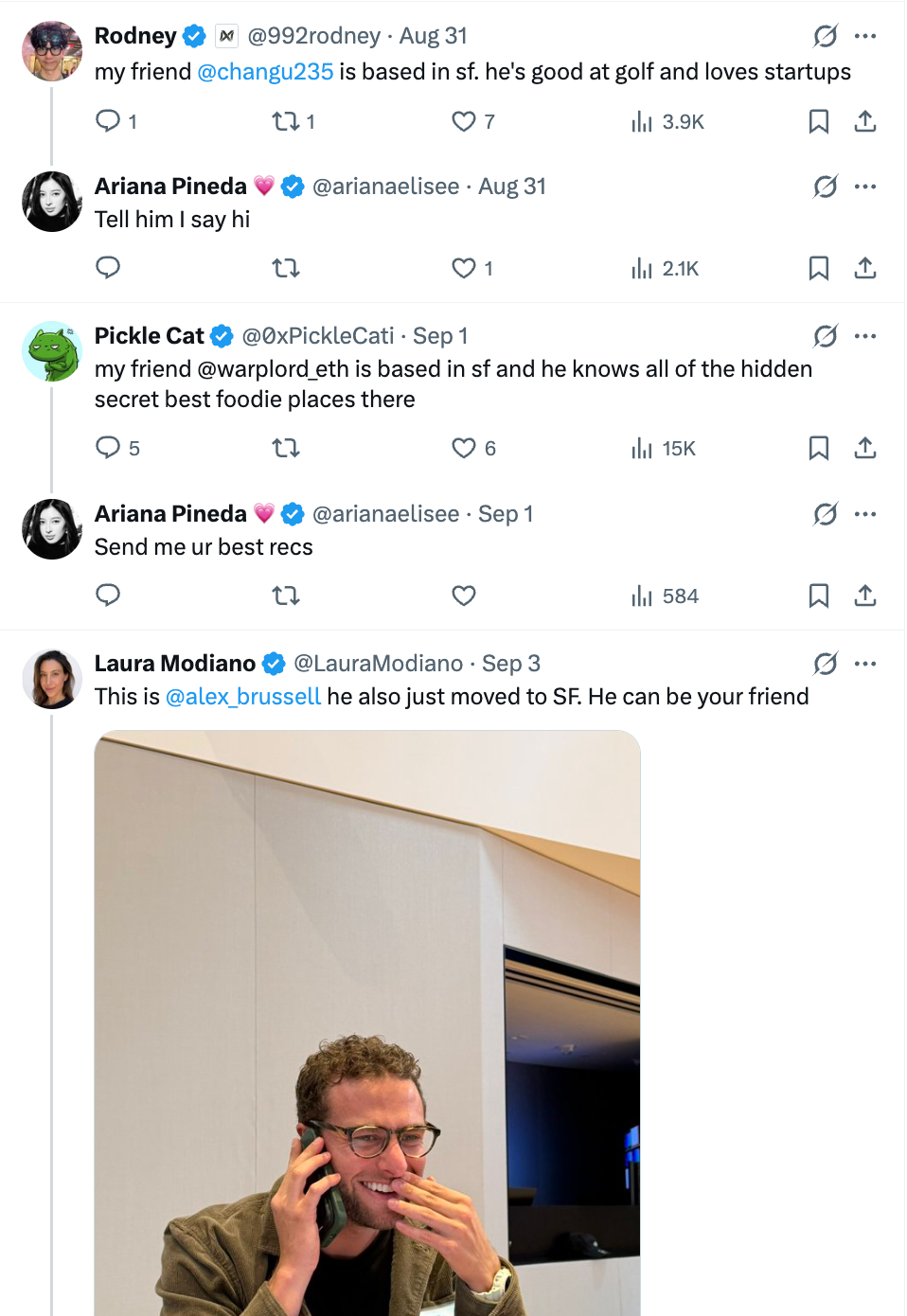
Witchel even tested this post archetype herself:
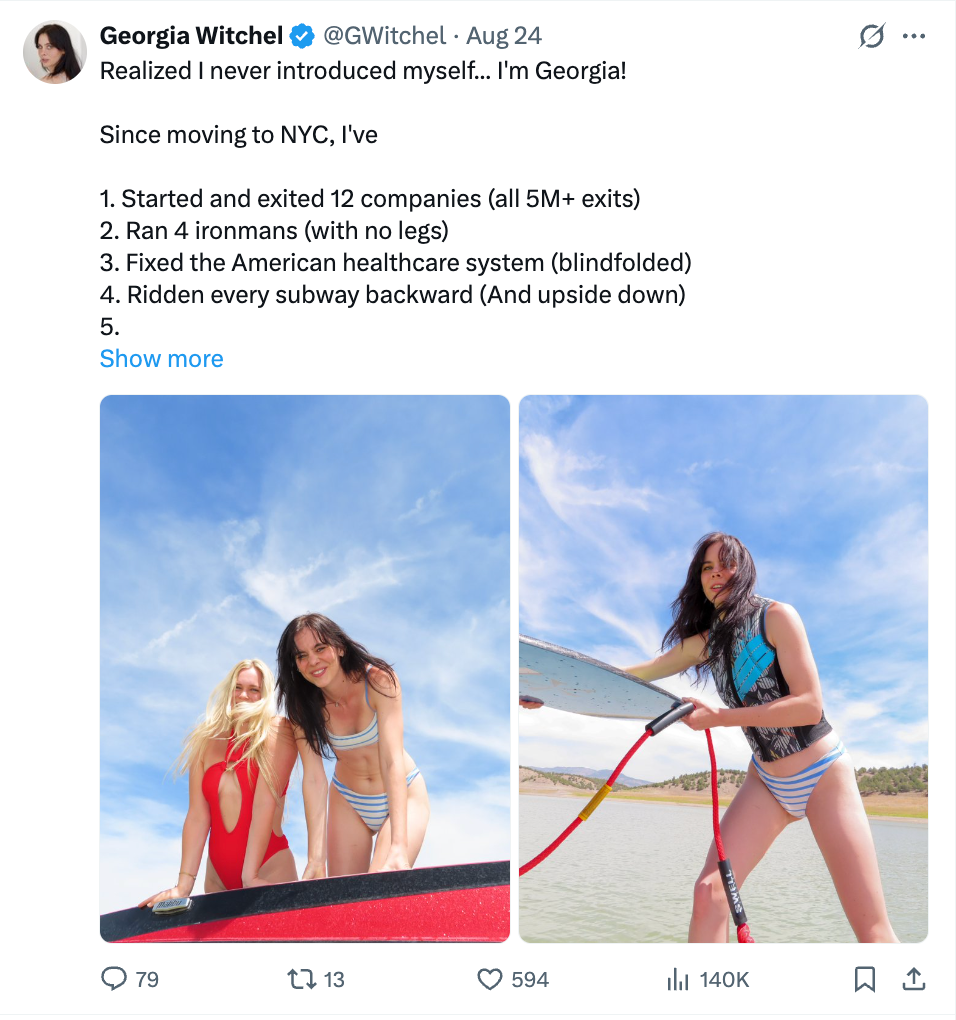
While some dudes are less than thrilled about the influx (one warned that “50,000 beautiful women in San Francisco would destroy the future of technology”), Witchel argues that it reflects a broader shift in Silicon Valley’s economics. AI has made software cheaper and easier to build, making sales and marketing increasingly important, while startups are swimming in venture capital. In the first half of 2026 alone, American startups raised $412.7 billion, 86 percent of which went to AI companies, according to Fortune. And apparently, sexy selfies are good for business? By Witchel’s calculations, five women posting two a week could generate roughly $138,000 annually in free advertising value.
Her favorite example is the “Corgi girls,” a group of photogenic, hyper-online women promoting Corgi — an AI-powered startup selling, of all things, commercial liability insurance. The company has raised over $431 million and purchased an $11 million property for its new café located near Union Square. It advertises a customer-acquisition budget with no preset ceiling, provided the spending pays off.
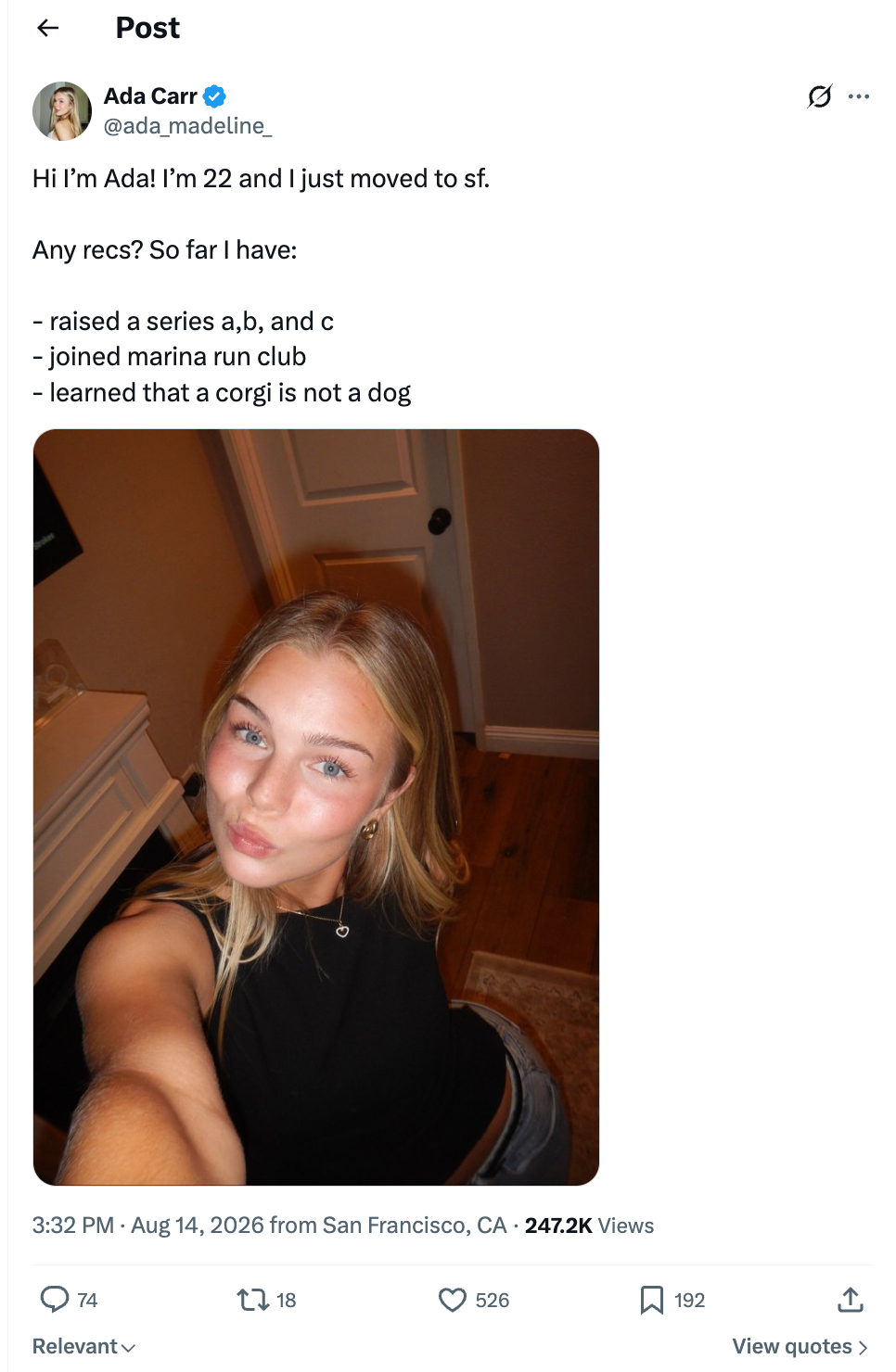
Similarly, Catarina, who works in strategy at Known, an AI-powered dating app in SF whose founder built the SF Hot List and also deploys hot sales girls on X, told Pirate Wires that it “just of course gets eyeballs.” In today’s attention economy, she explained, companies are desperate to “differentiate [themselves] in a very overly saturated market,” and apparently, “not even the most well-funded founders are immune to hotness.” One of Known’s matchmakers, Ada (see above), racked up roughly 247,000 views on a single X post.
Aaron, who is a founder of an AI company explained how the strategy works for him, “These days in tech, the name of the game [which used to be build, build, build] is to glaze the prospect as much as possible, give them a good time, bring a pretty girl around them, and make them feel good. When they’re the most vulnerable, we bring up the contract and we’re like, ‘You got to sign next week.’ And make them think that this lifestyle will keep going if they partner with you.”
(Aaron plans to use some of his funding to hire a few women to accompany him to a New York conference this week and attract potential investors.)
Per reports by the New York Post and the Wall Street Journal, some of these newcomers are probably gold diggers or even sex spies from Russia or China who’ve traded the honeypotting of diplomats for guys torturing AI in Anthropic’s backrooms (hate to see it, honestly).
However, Witchel raises a more interesting possibility, comparing these sales girls to the “booth babes” of the dot-com boom, when tech companies hired beautiful women to lure customers to convention stands and startups flush with VC money spent fortunes attracting attention. As we now know, the bubble burst, and the babes presumably disappeared with it.
A 2014 account of an experiment by marketing executive Spencer Chen suggests the babes may have been a spectacular misallocation of funds all along. At a software conference, he staffed one booth with beautiful models and another with two older women hired for their people skills (one was literally a grandmother). The models attracted just a third of the foot traffic and less than half as many sales leads.
Unlike the contracted models of the dot-com era, however, Witchel argues that today’s sales hotties are full-time employees who actually understand the products they’re promoting. Fair enough, but given the money and resources these startups appear to be pouring into their hot-girl marketing strategies, one wonders whether Silicon Valley has become a little too convinced that beautiful women are the answer to customer acquisition. After all, increasing top-of-funnel traffic doesn’t necessarily translate into paying customers.
Perhaps the hot girls in SF are just another symptom of an AI industry with more money than it knows what to do with. Which, for SF’s visually and romantically starved indigenous population, may not be the worst thing in the world. I guess… enjoy your bread and circuses.
— Nicole Wizman
we joined a data center founder's 'listening tour' through rural colorado. it went very badly and also very well.

breaking down former openai researcher nick cammarata’s new ‘interpretability’ findings on how ai models reason, and the debate over whether understanding ai will help us control it
a small group of people in the bay area believe ai will soon kill everyone. they are also having a bunch of rape-y orgies. what might explain this? an earnest philosophical inquiry

the shop says kelly clarkson has put them ‘in danger,’ but everything seems pretty relaxed inside (except for all the high-strung journalists)

los angeles keeps making it harder to build, buy, and stay, as its “mansion tax” and other restrictions fuel a massive exodus.
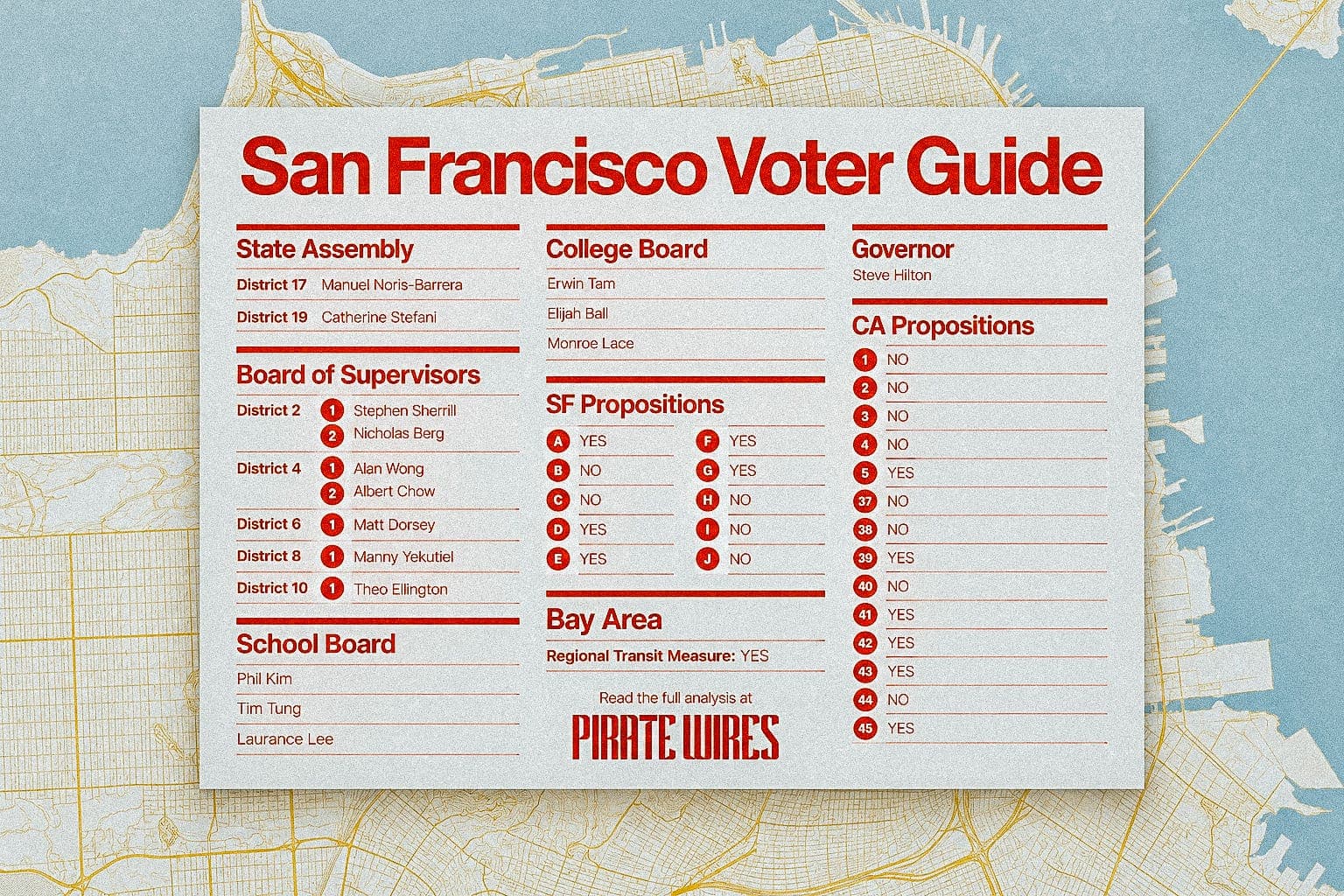
official endorsements for candidates who don’t want to burn down the city, and for ballot props that aren’t literally insane, from your beloved team at pirate wires