
Britain's Social Media Ban Isn't About the KidsJun 17
the initiative would make it impossible for people to anonymously criticize the government online
66 Likes
8 Comments
Jun 22, 2026
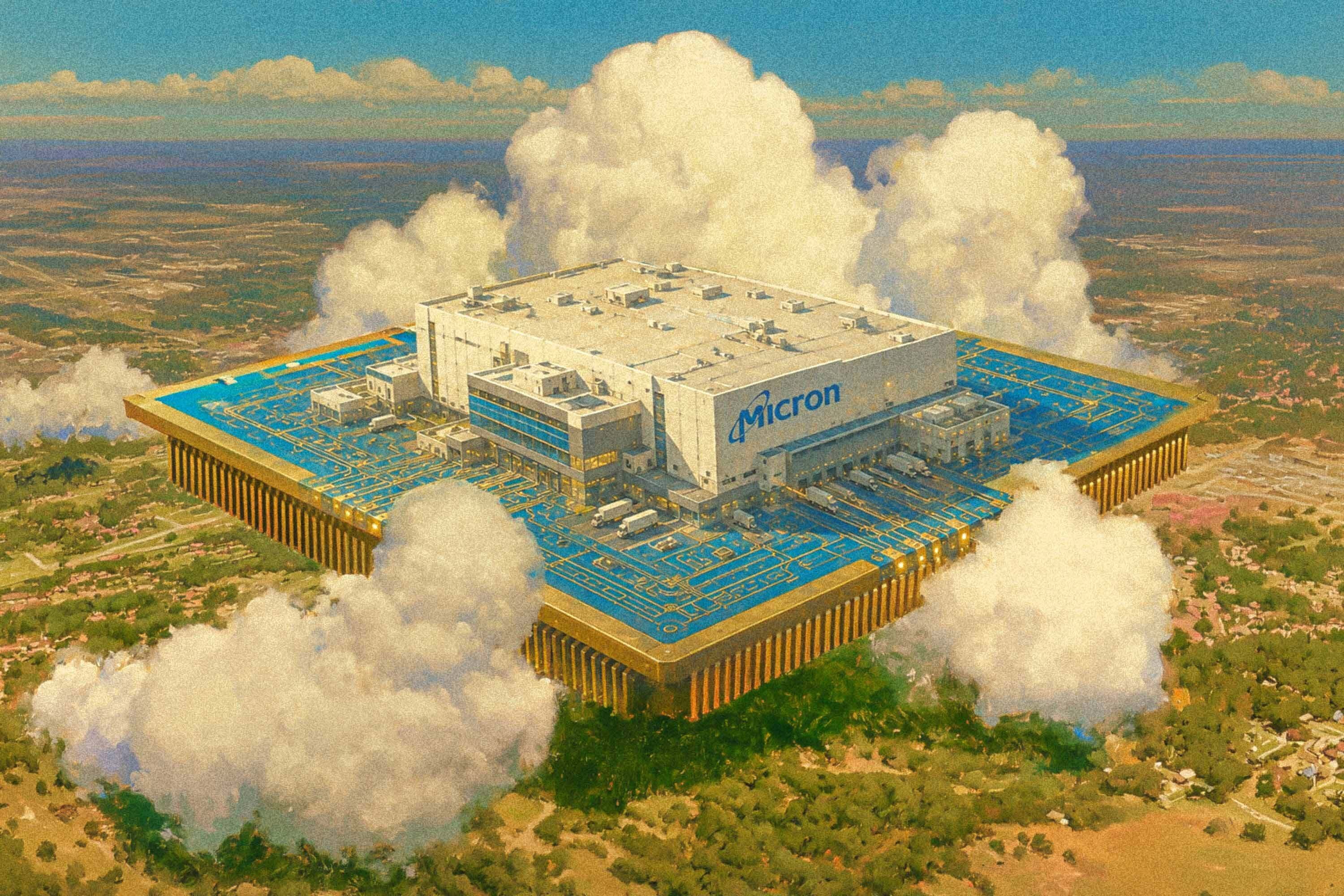
We’ve started to fetishize manufacturing. Everyone I see online — from the US government, conservative think tanker Oren Cass, or techno-optimist a16z — is telling me that America needs it.
And to be honest? I’ve bought in. At least a little bit.
We do need to bring back manufacturing to America. We do need to control our most critical supply chains. We do need to reclaim America’s greatest piece of heritage: our frontiersman spirit and innovative soul.
But am I alone in feeling like the love for “American dynamism” ends with a few flights to El Segundo and a couple YOLO checks into “hard tech” startups? Maybe I’m part of the problem. What do I (Pennsylvanian-born btw) know about the American heartland?
I had to find out for myself.
So in late February, I went down to the site that some hope is ground zero for America reclaiming its industrial heyday: Syracuse.
At America’s inception in the 18th century, Treasury Secretary Alexander Hamilton believed a nation that lacked the ability to build things would be consigned to weakness; dependent on other countries’ innovation and willingness to trade with them. He pushed for tariffs, subsidies, land grants, and a national bank — all in service of an America that could control its future prosperity.
By the 21st century, it looked like Hamilton’s fears had come true. Fearful that the US had become too dependent on Taiwan (while tensions with China were rising), the first Trump administration courted TSMC, the world’s most advanced chip manufacturer, to Arizona. The messy process — which showed policymakers that, in 2020, manufacturing chips in America was essentially a pipedream — eventually produced the bipartisan CHIPS and Science Act, signed into law by President Biden in 2022. Since then, the Trump administration has gone even further, taking equity stakes in companies that mine critical minerals, produce missile interceptors, and manufacture chips.
Much of our semiconductor investment has focused on logic: the part of the chip that does the computation. But Micron, valued at about $1.3 trillion, is a major competitor in the other main part of semiconductor production: memory, which every chip needs to function. We were facing memory shortages back in 2018; AI demand has made it worse. Data centers will consume 70% of all high-end memory produced this year — RAM prices jumped 50% in a single quarter — while we’re only expanding production by 16%.
Before President Trump, Micron still produced the majority of its memory offshore, in Taiwan and Japan. But a few months after the passage of the CHIPS Act, the company chose the Syracuse area for what could become a $100 billion, memory-chip manufacturing campus.
For that, I learned, Syracuse has Ryan McMahon to thank.
Back in 2017, McMahon, as chair of the local legislature (which decides how the county government spends their money), was trying to land an investment for the Syracuse community that could bring back the jobs they had lost to offshoring. But after pitching to a few companies, he quickly realized that the county wasn’t ready to host an industrial investment.
McMahon spent the next two years trying to ready Syracuse for a chip deal: assembling thousands of acres and lining up long-term water and power capacity. Ultimately the entire region of Central New York came together to pitch Micron, promising not just tax incentives but a workforce pipeline, including a $20 million semiconductor manufacturing center built by Onondaga County and Syracuse University. Micron reciprocated with a $15 million investment to build the nation’s first community-college cleanroom, where students could train for fab jobs before ever setting foot in a factory.
“Micron saw us as a community that could develop the talent, grow the talent, and we saw reindustrialization as the chance for a community comeback,” McMahon said.
And after Commerce Secretary Howard Lutnick got involved, Syracuse was able to negotiate a new deal: he reopened the grant agreements, slashing the onerous additional commitments, and getting Micron to agree to investing $30 billion more into building fabs in America.
Once upon a time, such investments weren’t necessary:
“We were once a really relevant community with innovation and manufacturing,” McMahon said. “And then over the years, we had the GMs, the GEs, the Chryslers, Carriers move manufacturing out of this community, and that really hurt us.”
Still, in a country that can’t even seem to manufacture its own combat boots, semiconductor manufacturing is quite the challenge. The factories are massive; they require vacuum-sealed chambers; and they operate at near-atomic scale — which is why Taiwan and Korea marshal massive amounts of resources to train and research semiconductor production. We’ve also got a bit of a cultural problem. Asian workers pull 12-hour shifts and literally pass out on factory floors. Here, we’ve reached a point where people would rather child laborers assemble their iPhones on the other side of the world than occasionally drive past a data center in their own community.
Can we really rebuild that competency here in America?
Micron is trying to find out.
Unfortunately, more than three years after the deal was announced, Micron’s “megafab” still looks like this:
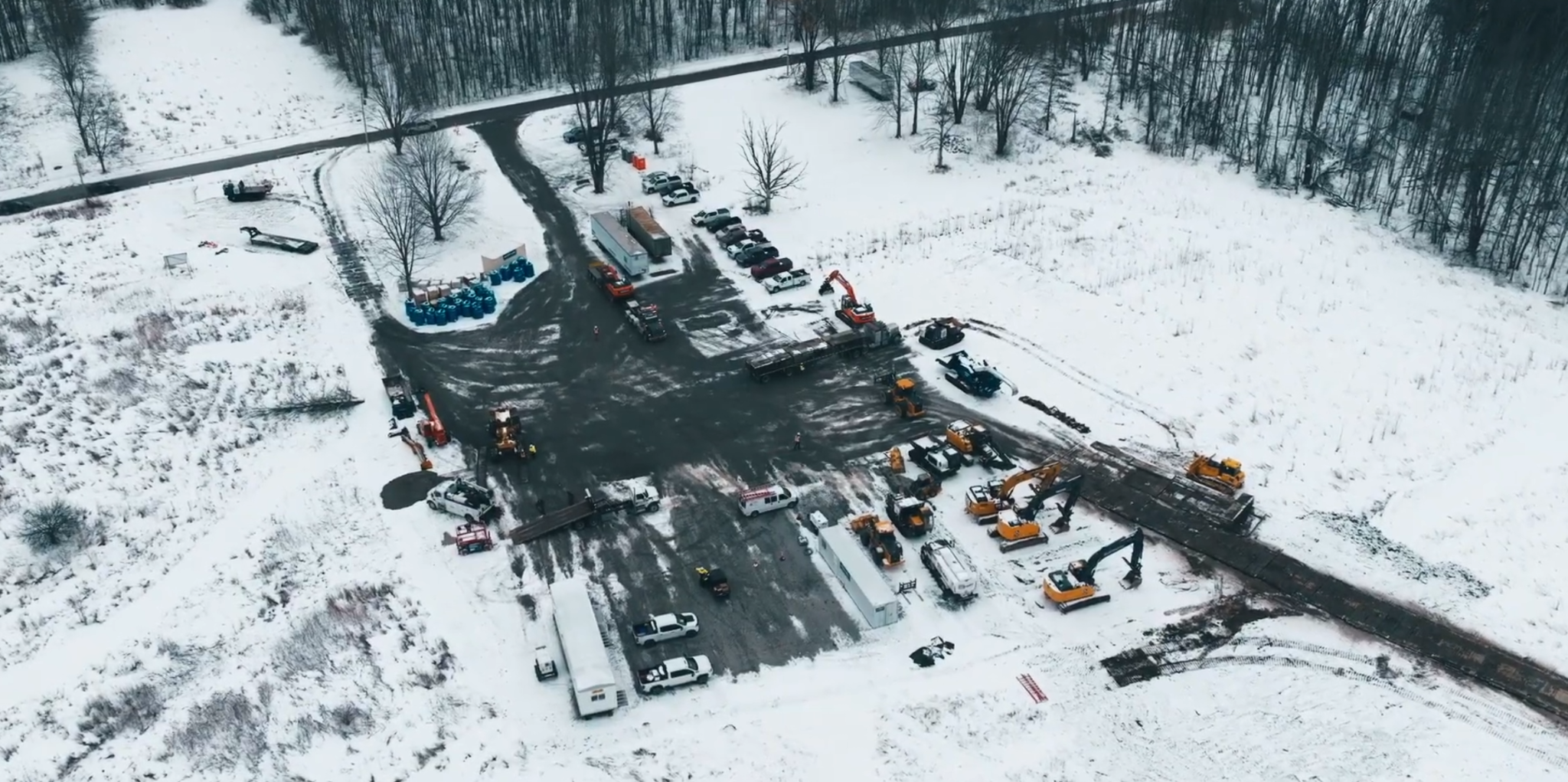
Because… America’s building challenges aren’t just financial.
As industrial policy researcher Dan Wang says: while China is an engineering state, America is a “lawyerly society.”
And that shows up everywhere. Even in construction.
For Micron to break ground, the company had to navigate a years-long gauntlet of federal, state, and local reviews. Because the project received CHIPS Act funding, it triggered an extensive federal environmental review, forecasting the project’s impact on land use, geology, soil, water resources, hazardous materials, noise, and greenhouse-gas emissions over decades.
Then came the state and local requirements. Micron spent years producing a 17,013-page environmental review for the state involving whether the megafab would squish anything archaeologically relevant (which required historians to literally visit the site and walk around) and its impact on the two endangered bat species living in the woods, among other factors.
But the review wasn’t enough to satisfy Area Karens. Micron had to sit through multiple public hearings, where citizens raised such concerns as “forever chemicals,” noise, and “the review was too long to read” (I’m paraphrasing).
Following the approval of a report the New York governor called “one of the most exhaustive expert analyses ever considered for a project in state history,” Micron finally broke ground in January — only to be foiled by Non-Area Karens mere hours later. That same morning, a Los Angeles nonprofit called Jobs to Move America, representing a couple Syracuse residents, sued to try and get the state to overturn Micron’s environmental approvals, arguing that the process was… rushed.
I think we can all agree that we shouldn’t be dumping toxic waste into the beautiful American environment willy-nilly.
But according to Sam Roland, a research fellow at the Foundation for American Innovation who specializes in permitting, most of the protections afforded by statutes like the National Environmental Policy Act are outdated.
Back in the 60s and 70s, regulators didn’t know how big projects might harm the environment. A broad, procedural process — the one Micron had to follow — was therefore created to force agencies to study potential harms from virtually every angle.
Now, Roland said, we actually have a good sense of what the substantial concerns should be (it’s super bad to harm wetlands, for example), yet the review process remains largely unchanged.
“The real problem, at the end of the day, is the fact that anyone who’s even vaguely related to this, who has an objection, can just halt the process for an incredibly long time through a not-very-costly suit,” he said. “Trying to get your documents through without objection is like trying to win a genuine election with North Korea–style margins.”
“We want to substantively protect the environment, but we’d also like to build things within my lifetime.”
When Pirate Wires (and SemiAnalysis) reported on the NIMBY war against Micron, we immediately started a shitfest on X, with many sensitive young poasters writing odes to the dying American heartland from their cushy VC offices.
But to state the obvious, there’s a disconnect between these national conversations about “reindustralization” and the local ones, if they’re happening at all. The few times I brought up reindustrialization in “Cuse,” I was met with empty stares and had to explain what I meant.
Normally when people write like this — Brooklynites decamping to a “remote part of America” — I find it shudderingly annoying. You’re not on a safari, calm down. But the converse — recording podcasts a thousand miles away from the actual work — might be even worse. There’s no way to tell this story without being on the ground.
The night I flew in, Syracuse was quiet. A light sprinkle of rain covered the city. The dull hum of solace was inviting and peaceful, isolating and lonely, all at the same time. Even the local newspaper I grabbed was despondent:

People seemed surprised when I spoke to them, as though, normally, no one cares enough to ask questions. But they were welcoming, too. After jolting a bit from my pointed questions, they tended to smile, nice enough to waste their time talking for as long as I wanted.
The first conversation started on my flight from Washington.
I ended up sitting next to a woman wearing a mask. Imagine my disappointment.
Still, as storms ravaged Reagan National, forcing a delay on the tarmac, we found ourselves talking for nearly an hour.
Her name was Dana Balter, a former Syracuse University professor and two-time Democratic nominee for Syracuse’s Congressional seat. And, although she was a lefty type, I found her incredibly illuminating.
When the topic of the Syracusan local government came up, she piped up, telling me how much the area’s changed.
Syracuse used to be a bustling industrial town, she said, but now, it’s nearly impossible for the residents to squeeze out a living. So much of the city is rundown. It’s not just that they aren’t building homes; the neighborhoods themselves are dilapidated and unfit for living in, she said.
But what about Micron? Well, as you’d expect from someone of her political inclination (see: masking in 2026), Balter brought up the incredible environmental impact. The water, and pollution, and what have you. And the fact that there wouldn’t be enough “equitable” jobs, whatever that means. But, but, but… “It’s going to be a generational opportunity for Syracuse.”
Yes, even despite all her hemming and hawing, even the most libbed out person you can imagine — insofar as they actually care about Syracusans — was still pro-Micron.
The promise of a semiconductor fab is massive. Micron’s facilities alone will need 9,000 permanent jobs to operate. The supporting companies, required to build and maintain something at industrial scale, will offer over 50,000 total across the state. That doesn’t count the thousands of shorter-term jobs required to get the facilities up and running.
And really, it’s what the city needs. At least according to my Airbnb host.
During my stay, I spent the week living out of the house/office of a wonderful Italian woman, who was managing dozens of other properties around town. As I’d come to learn, she’d spent the past few decades living in Syracuse, raising her three (now-adult) daughters.
How had the city changed?
“Everyone’s trying to leave,” she said.
There’s no future in Syracuse, she told me. Two of her daughters had left already, and the last, finishing up medical training, was raring to move to a city with promise. Every year, more of the people living in her properties have been struggling to keep up with rent.
As my host would tell me, Micron’s fab isn’t the first wonder project that’s been sold to Syracuse. A decade ago, then-Governor (and former wannabe Mayor) Cuomo was pushing a development project for a new tourist attraction. Resorts, gondolas, even a new river development. There would be “good jobs” aplenty.
But “they [the politicians and investors] lied,” she said. Syracuse got a somewhat large mall, and that was it. Auntie Anne’s is a great gig for kids in high school. But with the job scene being what it is here, the mall chains are staffed with their parents.
Micron is a mixed bag. Everyone — from my fellow United passengers to my Airbnb host to the local Best Buy cashier — has opinions. Housing is rough, now, apparently. Multiple people said that they’d heard of people getting offered hundreds of thousands of dollars above market prices from institutional investors or would-be real estate moguls, anticipating the demand increase from the Micron factories. That, combined with the disappointment of the last development, has sparked uncertainty.
But a waitress talked about how much the city’s changed recently. It’s very different from 10 years ago. Some areas are bustling with semiconductor-financed activity. There’s tension in the air. Residents are curious: will this project actually do something?
One, at least, is very bullish.
“They’ve already started the first phase of building,” McMahon, the county exec, said. “Just clearing that site, getting it ready, and pouring foundation — that investment alone is the largest private sector investment in our community’s history.”
“A lot of it is that it’s a little too good to be true for us getting this type of win,” he continued. “But the reality is, we’re worthy of good things. We have a lot to offer, from workforce to natural resources. We put it all together. The project’s already started, and it’s going to create economic opportunities we just haven’t seen here before.”
Last month, I took a trip to one of Micron’s bigger fabs in Manassas, Virginia. It offered a look forward to what Syracuse could be.
One of the people who showed me around said that he had worked there for 15 years without a college degree — moving from a technician, to an engineer, to helping manage the plant.
“You don’t need a four-year degree to get into the industry,” Bo Machayo, a different Micron executive, told me. Micron’s creating more than “just jobs — they’re careers.”
While there, I also had the opportunity to ask a couple questions of Sanjay Mehrotra, Micron’s CEO, and Jamieson Greer, the US Trade Representative, about the Syracuse site.
Per Mehrotra, the company’s incentives are aligned with the city’s. And more than that, “Micron’s investments here in America — $200 billion over the course of the next several years — will be creating 90,000 well-paying jobs [across America],” he said.
Greer added that manufacturing jobs were up in the first quarter for the first time in a while.
“As I go around the country and visit factories — in Michigan, in Ohio — I see companies hiring,” Greer said. “I see them using AI to make their workers more productive and hire new people.”
AI-powered reindustrialization?
The Syracuse fab still doesn’t exist (thank you, obtuse permitting process). Residents are clearly shaky on what the project will mean for them. But if we want to reindustrialize… I think back to what Dana Balter told me.
“It’s going to be a generational opportunity for Syracuse.”
Is Syracuse a kind of blueprint?
What kind of America do you want your kids to grow up in? One where they can point to things in their everyday lives and be proud that we built them? Or one where they can’t buy a car if another country decides they aren’t happy with us?
Reindustrialize or die.
—Ryan Hassan
the initiative would make it impossible for people to anonymously criticize the government online
we've entered a gerrymandering arms race, so i asked nine large language models to design 'fairer' congressional maps — here's what they came up with

in which hollywood’s most charming wellness mom chats with anduril’s cofounder about love, war, God, and her ‘very progressive’ husband

this isn’t your typical space company IPO where we quibble about financials — it’s a ride on the proverbial starship

dubbed the “stop nick shirley act” by critics, california’s ab2624 has passed through the state assembly — a necessary protection from doxxing? or a middle finger to the first amendment?

we read the pope's 40,000-word ai manifesto. he doesn't think 'alignment' is enough to avoid disaster