
Britain's Social Media Ban Isn't About the KidsJun 17
the initiative would make it impossible for people to anonymously criticize the government online
76 Likes
9 Comments
Jun 22, 2026
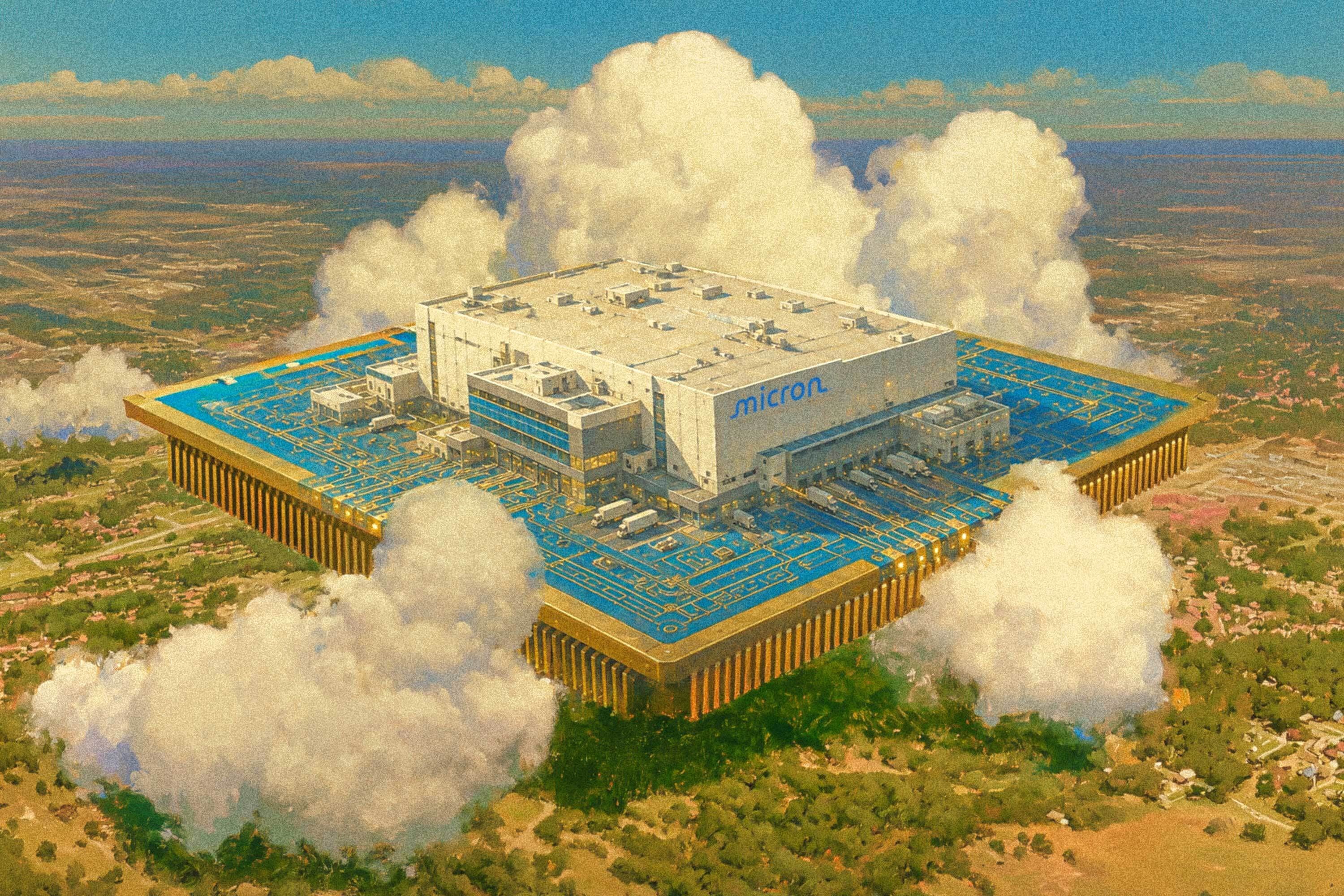
We’ve started to fetishize manufacturing. Everyone I see online — from the US government, conservative think tanker Oren Cass, or techno-optimist a16z — is telling me that America needs it.
And to be honest? I’ve bought in. At least a little bit.
We do need to bring back manufacturing to America. We do need to control our most critical supply chains. We do need to reclaim America’s greatest piece of heritage: our frontiersman spirit and innovative soul.
But am I alone in feeling like the love for “American dynamism” ends with a few flights to El Segundo and a couple YOLO checks into “hard tech” startups? Maybe I’m part of the problem. What do I (Pennsylvanian-born btw) know about the American heartland?
I had to find out for myself.
So in late February, I went down to the site that some hope is ground zero for America reclaiming its industrial heyday: Syracuse.
At America’s inception in the 18th century, Treasury Secretary Alexander Hamilton believed a nation that lacked the ability to build things would be consigned to weakness; dependent on other countries’ innovation and willingness to trade with them. He pushed for tariffs, subsidies, land grants, and a national bank — all in service of an America that could control its future prosperity.
By the 21st century, it looked like Hamilton’s fears had come true. Fearful that the US had become too dependent on Taiwan (while tensions with China were rising), the first Trump administration courted TSMC, the world’s most advanced chip manufacturer, to Arizona. The messy process — which showed policymakers that, in 2020, manufacturing chips in America was essentially a pipedream — eventually produced the bipartisan CHIPS and Science Act, signed into law by President Biden in 2022. Since then, the Trump administration has gone even further, taking equity stakes in companies that mine critical minerals, produce missile interceptors, and manufacture chips.
Much of our semiconductor investment has focused on logic: the part of the chip that does the computation. But Micron, valued at about $1.3 trillion, is a major competitor in the other main part of semiconductor production: memory, which every chip needs to function. We were facing memory shortages back in 2018; AI demand has made it worse. Data centers will consume 70% of all high-end memory produced this year — RAM prices jumped 50% in a single quarter — while we’re only expanding production by 16%.
Before President Trump, Micron still produced the majority of its memory offshore, in Taiwan and Japan. But a few months after the passage of the CHIPS Act, the company chose the Syracuse area for what could become a $100 billion, memory-chip manufacturing campus.
For that, I learned, Syracuse has Ryan McMahon to thank.
Back in 2017, McMahon, as chair of the local legislature (which decides how the county government spends their money), was trying to land an investment for the Syracuse community that could bring back the jobs they had lost to offshoring. But after pitching to a few companies, he quickly realized that the county wasn’t ready to host an industrial investment.
McMahon spent the next two years trying to ready Syracuse for a chip deal: assembling thousands of acres and lining up long-term water and power capacity. Ultimately the entire region of Central New York came together to pitch Micron, promising not just tax incentives but a workforce pipeline, including a $20 million semiconductor manufacturing center built by Onondaga County and Syracuse University. Micron reciprocated with a $15 million investment to build the nation’s first community-college cleanroom, where students could train for fab jobs before ever setting foot in a factory.
“Micron saw us as a community that could develop the talent, grow the talent, and we saw reindustrialization as the chance for a community comeback,” McMahon said.
And after Commerce Secretary Howard Lutnick got involved, Syracuse was able to negotiate a new deal: he reopened the grant agreements, slashing the onerous additional commitments, and getting Micron to agree to investing $30 billion more into building fabs in America.
Once upon a time, such investments weren’t necessary:
“We were once a really relevant community with innovation and manufacturing,” McMahon said. “And then over the years, we had the GMs, the GEs, the Chryslers, Carriers move manufacturing out of this community, and that really hurt us.”
Still, in a country that can’t even seem to manufacture its own combat boots, semiconductor manufacturing is quite the challenge. The factories are massive; they require vacuum-sealed chambers; and they operate at near-atomic scale — which is why Taiwan and Korea marshal massive amounts of resources to train and research semiconductor production. We’ve also got a bit of a cultural problem. Asian workers pull 12-hour shifts and literally pass out on factory floors. Here, we’ve reached a point where people would rather child laborers assemble their iPhones on the other side of the world than occasionally drive past a data center in their own community.
Can we really rebuild that competency here in America?
Micron is trying to find out.
the initiative would make it impossible for people to anonymously criticize the government online
we've entered a gerrymandering arms race, so i asked nine large language models to design 'fairer' congressional maps — here's what they came up with

in which hollywood’s most charming wellness mom chats with anduril’s cofounder about love, war, God, and her ‘very progressive’ husband

this isn’t your typical space company IPO where we quibble about financials — it’s a ride on the proverbial starship

dubbed the “stop nick shirley act” by critics, california’s ab2624 has passed through the state assembly — a necessary protection from doxxing? or a middle finger to the first amendment?

we read the pope's 40,000-word ai manifesto. he doesn't think 'alignment' is enough to avoid disaster